
Patience and Hope: In the Stream with Chuck Neuner
By Samuel Sherman and Jason Rintz
Chuck Neuner knows all sides of fly angling. He began fishing with a fly rod as a boy on Long Island, and found himself making fly rods by the age of twelve. His passion for the sport led him to eventually become President of the Art Flick chapter of Trout Unlimited as well as an officer of Theodore Gordon Flyfishers. These days, he’s focused on making bamboo fly rods through his business, Carmans River Rod Company.
An engineer by trade, Chuck lends his extensive knowledge of design and chemistry to building fly rods out of bamboo. Chuck has done it all in his decades of experience building bamboo rods, and he’s generously donated one of his works of art to NYC Trout Unlimited. The 7’ 3” rod is the grand raffle prize at the chapter’s 2026 annual holiday party.
Chuck recently chatted with NYC Trout Unlimited to talk about getting his start with rod building, the intricacies of working with bamboo, and how taking a strategic view on conservation may be the key to long-term success.
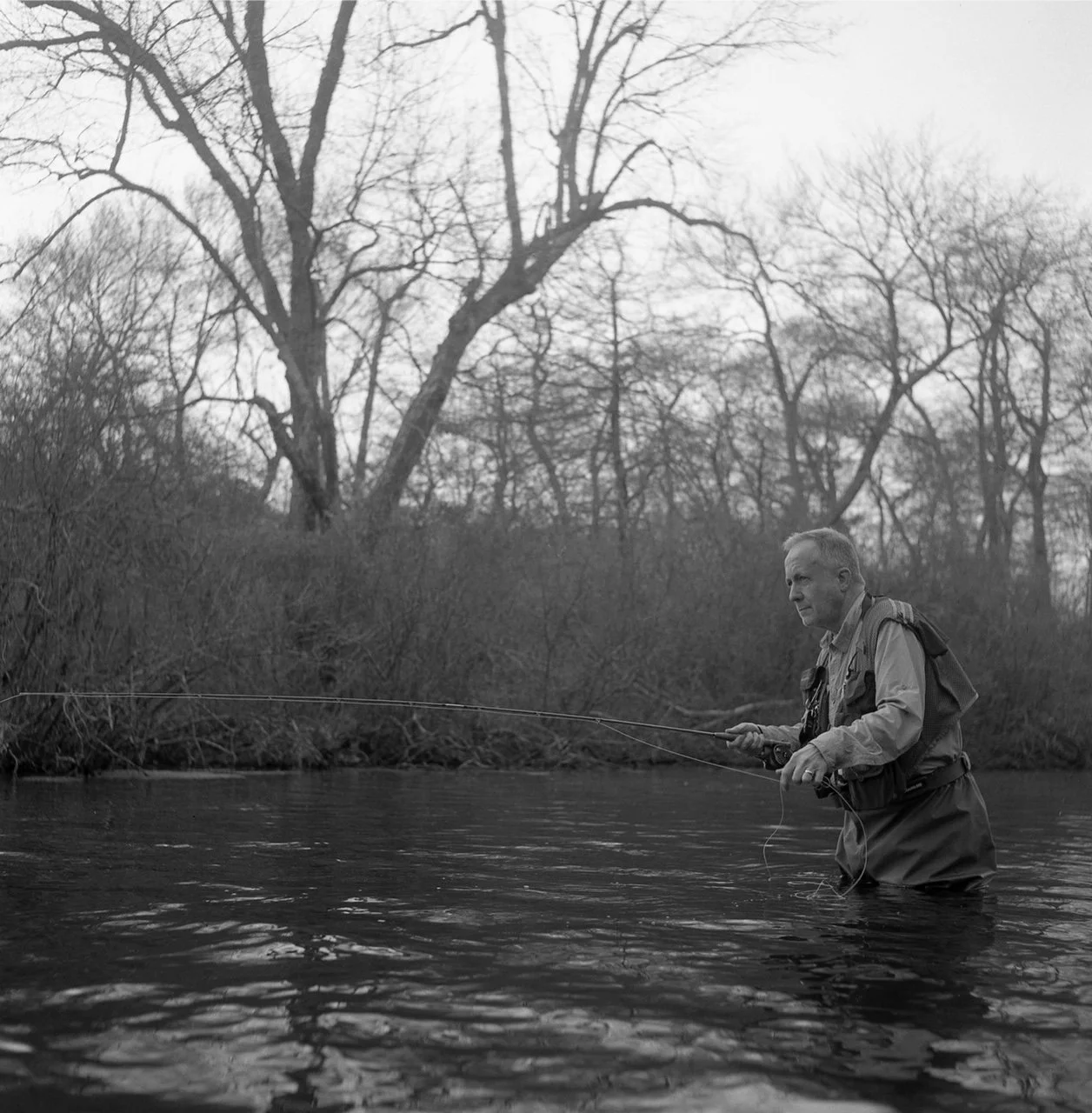
Chuck Neuner fishing the Carmans River, his home water
Photo by Steve Jauch
Jason Rintz: Chuck, for people who aren’t already familiar with you, would you mind just telling us a little bit about yourself?
Chuck Neuner: I worked in mechanical and manufacturing engineering my whole career, mostly in pharmaceutical and cosmetic treatment technical packaging. That entails dosing, storage of different types of formulas, and delivery systems for different formulas.
I work now on my own with clients in the same industries, again mainly pharmaceutical and cosmetic. Some of my clients are in the US, but most are in Europe, Germany and the Netherlands. I work with Philips on and off, and with some other German companies that collaborate with universities on different projects. My responsibility in the whole mix is getting things from a conceptual point to something you can actually market.
JR: How did you get started with fly fishing?
CN: I was born and raised on Long Island, where we're surrounded by saltwater and everybody and his dog is into saltwater fishing. I was brought up around boats and flounder rigs and frozen squid and sinkers and buckets of shiners. But I always liked lakes and rivers, and there are a lot of them here on the island.
For the same reason that there's a lot of saltwater fishing here, there were usually not that many people on the rivers or the lakes when I was a kid. It was wonderful. I fished a lot on the Carmans River, which is the namesake of my company, when I was a boy. Long ago, it was a private hunting and fishing preserve. Then the county bought it and it was kept closed for about 10 years before they opened it as a state park.
One time I went fishing on the Carmans and saw somebody fly fishing, which I’d never seen before. I saw a man cast under a tree and catch a trout. I asked him what he used. He held a blue dun in his hand, and he clipped it off the tippet and gave it to me. He said it imitated an insect called a blue dun. I thought it looked like a mosquito, but there you go.
When I came back from that trip, I told my family about it right away. My grandparents lived with us. My grandfather wasn't a fisherman either, but he liked things that I was passionate about. At Christmas, he surprised me with an eight-foot, eight-weight Abu Garcia rod and reel combination and a fly-tying vice. He guided me toward Charlie’s Bait and Tackle, which sold hooks, feathers, and other things used to make flies. I rode my bike down there to look at fly-tying materials and, no joke, I thought they were parts for taxidermy.
I realized later that the rod was too heavy. I do think it made me better at presenting a fly than I otherwise would have been. I learned how to not put a fish down on a spring creek using an eight-weight line. I ended up having to throw many Hail Marys and let a long drift come down.
Later on, I met that man who gave me the blue dun. I can’t recall his name, but he was a member of the now-defunct Long Island Fly Tiers. It was very kind of him to give me that fly. Kind indeed. Getting young people involved in fly fishing is a wonderful thing. It imbues kids with patience and hope, because you don’t know what’s going to happen in fishing or in life.
Samuel Sherman: How did you start building fly rods?
CN: I’ve been building fly rods almost my entire life. I built my first one when I was 12. I bought a fiberglass blank from Fireside Angler, a long-defunct fly fishing and fly-tying supply store that was in Melville, New York.
It was run by Eric Leiser, who passed away not too long ago, and Greg Mickelson, who's out in the world someplace. I haven't seen him in a long time. They sold everything from necks to feathers to hooks. You couldn’t think of a fly-tying material for a trout or salmon fly that they didn’t have. They also had rod-building supplies from Fenwick, the Golden Eagle blanks.
I built a 6’ 9” four-weight and a 7’ 5-weight using those blanks. The only instruction I had was asking Greg how the rods stayed together. He asked whether I’d ever whip-finished a rope, and I had because I was in Boy Scouts. From then on, I fished with those rods.
One of my friends' fathers saw me with the rod and he asked who made it. I told him I did. It turns out, he and five of his friends were anglers, and they all ordered a fly rod from me. By the time I was 14, I’d sold a couple of fiberglass rods. I tied flies, too. I started tying flies when I was about 13. I used to ride my bike to get all the supplies because I couldn't drive yet.
For a while I’d make a graphite rod with blanks from Merrick Tackle. Boron became a very hot thing for a while. I played around with it until it fell out of favor. I knew of a blank supplier called Powell Rod Company, which is not around anymore, and they made graphite rods as well as bamboo rods. They had a custom builders program, where you got their blanks at a discount and were covered by their warranty. They wanted to see how they came out before they gave their stamp of approval. I made one, sent it in, and got approved. I bought their blanks for a while, then I started repairing rods for people and picked up a bamboo rod from a friend’s dad who needed a guide put on. I started looking at it and wondering how it was done.
That was probably the early 1990s. By the mid-’90s, I had already started making my own forms. A friend of mine got me Everett Garrison’s book with Hoagy Carmichael. I started reading that, and I couldn’t get forms, so I made them. It grew from there. I sold a few bamboo rods here and there, and by 2001 I had incorporated my company.
I had a better set of forms, and it went from being a hobby more than a business, to a business more than a hobby. It's still a passion, but my approach to the whole thing is a lot different than it was when I first started.
SS: Where do you sell your rods?
CN: Early on, I would sell rods occasionally through Bill Balin's shop, the Reel Maker, until he retired and moved to Florida. Lem Cadella, who was a past president of Thompson Thomas, would carry my rods. And Frank Kuttner, who had a shop up on the road from Livingston Manor out to Lew Beach, carried my rods, too.
These days I sell them directly to people, mostly word-of-mouth. I sell some through Spinoza Rod Company, Mark Iron's company. I sell them through some brokers overseas. I have a rod maker friend, Shuichi Akimaru, who's very famous in Japan. He's sort of like Japan's Per Brandin. He speaks very little English, and I speak no Japanese, but we get along the way musicians get along. Aki sells some of my rods occasionally at a fly fishing show in Japan. Recently I started talking to Nick Sanfield at Freestone Vintage Tackle. He may carry some of my rods, too.
JR: It sounds like you've got quite the business going.
CN: It's a funny thing. My work in technical packaging for cosmetics entails designing things like pumps and other devices that store and deliver doses of cosmetics or medical products. Because of that background, I became a student of prestige goods. By any definition, a bamboo ride is a prestige good.
As far as the business is concerned, it's a very amorphous business model by nature. It's driven completely by passion. There's no rhyme or reason to it. You don't need a bamboo rod any more than you need a Ferrari.
I’d rather not talk about my production, but I will say I make not as many rods as some, but more than most. It's a second job, frankly, but a passionate one.There's nothing better than going into my shop, turning on the radio, drinking a cup of coffee, and getting going. I love it. I wish I could do it full-time. We'll see what happens.
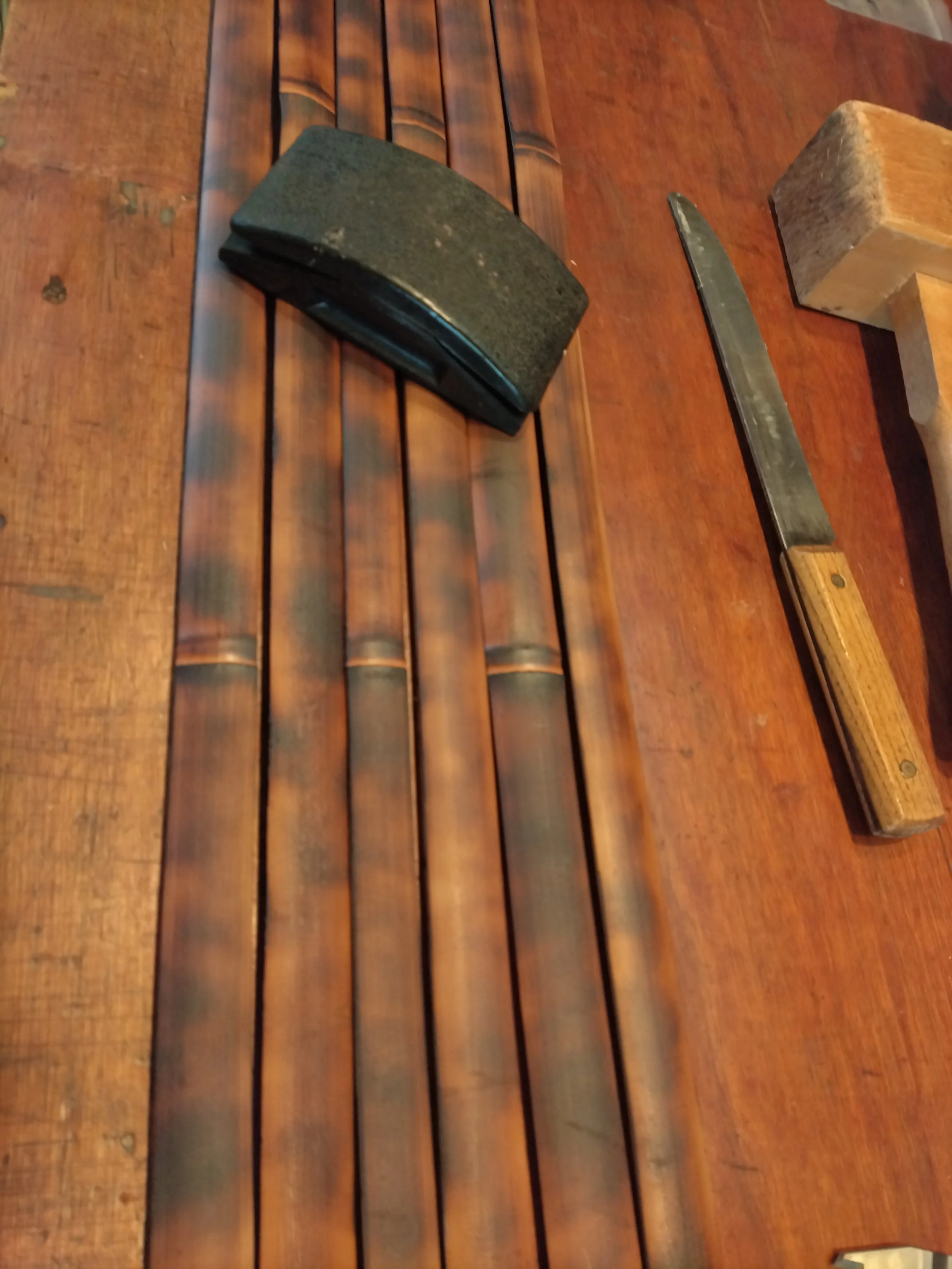
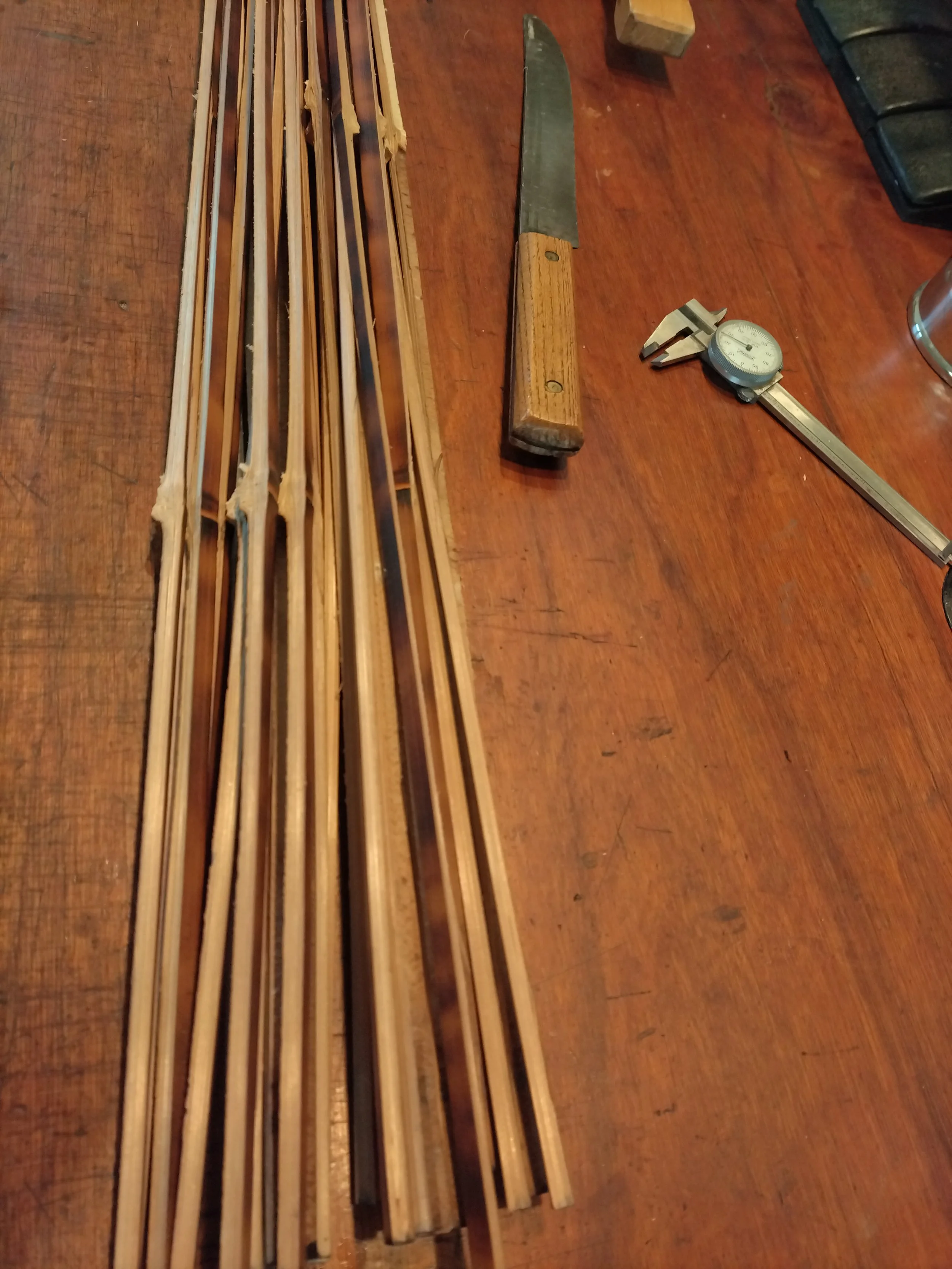
Tools of the trade
Photo by Chuck Neuner
Split bamboo
Photo by Chuck Neuner
SS: I'm quite curious about rod making. I love bamboo rods, but am unfamiliar with the building process. What does your process look like?
CN: As someone who hand-planes rods, what I do is very analogous to somebody who does it strictly as a hobby. Bamboo is still available, but it’s become more complicated to source. It’s expensive, of course, because you’re shipping a lot of length. Today, to ship a bale of bamboo that’s 10 or 12 pieces and 12 feet long, it’s the same cost for the shipping as it is for the bale. So, bamboo today is essentially twice as expensive.
You don’t need a whole lot of tools to make a bamboo rod. If somebody’s never made a rod before, I’d recommend they borrow or find a set of forms and a block plane. That’s almost all you need. You can buy pre-shaped cork grips. You can buy reel seats rather than make your own. You can buy guides and ferrules. As long as you have a knife to split the comb into pieces and a plane and a form, you can make a bamboo rod. That's really all it amounts to.
For people starting out, the smart thing to do is get a fiberglass or graphite blank and learn how to wrap guides and mount grips, before moving on to bamboo. You’ll learn all the things you have to do to assemble a bamboo blank, anyway. At least half of the work is done after the blank is completed. You can learn those operations on any blank, it doesn’t have to be bamboo.
If someone does want to split their own bamboo, I recommend getting some cheap bamboo to learn on. Go to Lowe's or Home Depot and find bamboo that's an inch thick or maybe a little bigger. Nobody talks about it, but splitting bamboo is much more difficult than planing the rod. The bamboo doesn’t split straight down. The split wanders when you cut, because the fibers are between 1 and 1.5 inches long. The bamboo doesn’t split straight down; you can move the knife left or right as you’re splitting. You want a uniform split, and it’s a tricky business to achieve that. A comb of tonkin cane is more expensive, and you don't want to be wasting that cane when still learning how to split bamboo.
In my case, I split out the blanks, then plane them. I let them cure for a while, not only for the glue to cure, but also for the blank itself to stabilize. It'll become more straight as it hangs. Usually when you get new bamboo, there’s somewhere between 17 and 23 percent moisture in the bamboo. After heat treating, the moisture goes down to zero and it'll come back to around between 13 and 17 percent, but it won't go any higher. The bamboo has been changed both structurally and chemically. When you start planing, it's still doing that because it doesn't have any varnish on it yet. When you glue it, it's actually been stabilizing for a long time.
After that, I glue them. I take them out when they're ready, scrape them out of the glue, then sand, polish, and straighten them. At this point, they don't have ferrules on yet. I make my own ferrules, and like having my own components on each rod. It’s a matter of principle.
SS: You prefer to make ferrules and you make your own forms. Is there anything else that you make?
CN: Sometimes, if I have special burls, like the one I made for NYC TU, I make the seat. I made the band. The cap I got from REC because they get them stamped for me. REC is a components manufacturer in Connecticut.
The guides I get are from Snake Brand Guide. They're very good guides. There's a lot of good guides out there now. Pacific Bay, or Pac-Bay, makes some very strong, reasonably priced guides. The bar has been raised over the years with so many of these components across the board.
If you really want to try making a bamboo rod, you could make one from a blank and see how you like the whole process before you start actually planing a blank. That's an important thing to remember: people seem to gloss over everything else that needs to be done to make a rod. Making a two-piece, two-tip bamboo rod means taking 12 pieces of bamboo and planing them into tapered triangles and gluing them together.
From there, all the headaches you’d have making a bamboo rod are the same as you’d have if you bought a blank. The only difference is you’re not gluing it together. I recommend that if anyone wants to try making a rod, do it in stages. Get a graphite or fiberglass blank and built. After you do that a time or two, you can start thinking about making a blank. Making a blank is complicated, but it’s the least of your worries. There’s a whole lot of other things to think about.
SS: That's where I am on the rod-making journey. I haven't graduated to bamboo yet.
CN: That's the way to do it.
SS: What are people looking for in a bamboo rod today?
CN: That's an interesting question. I started out making rods based on classic rod tapers, designed by Everett Garrison and Paul Young. Both of them have long since passed away, but others carried on their tradition. The rods I prefer have actions that I'm comfortable with and that are analogous to conventional rods that I learned on. This seems to be more what people are looking for today in a bamboo rod, something that doesn’t force them to change their style, the way they cast or the way they fish.
From an engineering and design perspective, I look at bamboo rods less as a bamboo rod in the iconic sense and more as a fly rod that's been executed in bamboo. You can look at a wooden chair from the 1800s, and then you can look at a wooden chair designed by Thomas Moser. They're both executed in wood, but they're very, very different in terms of their form and function. They’re executed in the same material, but they're engineered differently.
A bamboo rod is ideally suited as a tool for fishing dry flies, small emergers, and small, soft hackle wet flies, because of the way it presents a fly and the way it lays out a line. It's very difficult to achieve the same effect with a synthetic material for no other reason than that material has to have a minimum thickness and has to be wrapped around a mandrel.
The nice thing about bamboo is that since you're tapering it from the outside, and it's solid throughout, when it gets down to the upper third of the rod, you can make the action be anything you want without worrying about a mandrel inside. People today are looking for a bamboo rod that will allow them to do that.
I don't think anybody's looking at bamboo rods from a nostalgic perspective. They're starting to accept it more as just one more material in the fly rod milieu. In that sense, the aesthetics of bamboo rods are starting to change. The average bamboo fly rod made in a more traditional manner has at least an ounce’s worth of hardware and reel seat on it. By today's standards, you wouldn't see that for any reason except for nostalgia. People don’t want the weight.
The rod I donated is a very traditional rod. Traditional rods are beautiful things, but bury reel seats are heavy compared to the cork or aluminum reel seat that you normally see on a more modern rod. Bamboo rods have a certain traditional elegance about them, but that could be viewed as emotional baggage. People expect a bamboo rod to look a certain way.
JR: What are your favorite variations of rods to make? What kinds of rods do you make the most of?
CN: I enjoy them all. I love the traditional look of a traditionally-made bamboo rod. On the other hand, I've made some that are sort of the “Formula One” version of a bamboo rod, in the sense that they have lighter components that were designed and selected completely for performance and weight. That’s a whole different animal.
Those are the kind of rods I seem to be selling more now: rods that have a fit and a finish and componentry and taper design that are more analogous to a conventional rod’s casting styles and lines. But that at the same time, rods that bring the sensitivity, tippet protection, and presentation ability of a traditional bamboo rod.
Also lengthwise, there's a sweet spot for every material. Graphite, fiberglass, and bamboo are pretty close. I don't make hollow rods out of bamboo, but I can and have made them. I’ll make them for special orders, but normally I prefer a solid-built rod. Generally speaking, my rods are 8’ 3” and shorter for line weight 6 and lighter, with the sweet spot being somewhere between 7’ 9” and 7’ 3”. The one I donated is 7’ 3”. In that window is where bamboo really shines as a material, and where other materials have a difficulty.
I don't make rods shorter than 6’, and I don't make them longer than 8’ 3”, except on special request. Most of my rods are 6’ 3” to 7’ 9” for line weights four and five.
JR: I can imagine every rod you build is unique in its own way. What makes the rod you donated unique?
CN: There was an embargo on bamboo when World War II began, and it continued after the Communists moved into Vietnam. It was finally lifted under the Nixon administration, and Orvis was the first entity to go over there to get bamboo after it was. I happen to have a bunch of post-embargo bamboo from the early ‘70s that I got from the Orvis plant in the early 2000s. The plant was moving to its current location, and they were tearing down the old plant. If you’ve ever visited Orvis in Manchester, Vermont, the old plant was back to the right of the current one, maybe a quarter mile downstream on the Battenkill.
My wife is originally from Saratoga Springs. We’d go up there to see her parents, and I’d fish the Battenkill. I figured I’d see if Orvis had some bamboo they would sell. I called them up, and it just happened to be the day when they were moving the plant. The plant manager said, “We made as many blanks as we could before we shut the machine down. We have a lot of bamboo left over and we’re going to donate it to the fire department.” I said, “What? I’ll be right up there.”
I had an old Jeep Grand Cherokee CJ, and I drove there with a buddy of mine. We put the back seat down and packed it side-to-side, floor-to-ceiling with this 50-year-old bamboo. It was packed right up to the back seat, and if we had gotten into an accident, it would have taken our heads off. I had a bunch of it and I’ve used it over the years. The rod I donated is made from that post-embargo Orvis bamboo.
Because bamboo is a natural material, you don’t know how it’s going to flame. This rod is a really nice color, a sort of tomato-amber-orange. The reel seat came from a piece of Amboyna burl, which is very difficult to get a hold of in that quality. That's why it looks so mottled. As luck would have it, I also had a piece of Amboya barrel that I’d gotten from a neighbor. When I bought my house, the man who lived across the street was a retired British expatriate who’d worked for a high-end billiard company. He’d come by my shop to hang out, saw what I was doing, and brought over a big box of 18-inch long pieces of barrels. They would make billiard cue handles out of them, and I thought they were perfect. I’ve used them for reel seats for special occasions.
That’s where that came from, and the color was perfect, with the flaming and the wraps. It all just sort of sang. Once you see it coming together, you know what to reach for because everything sort of harmonizes.
JR: Someone in the next couple of weeks is going to be the lucky winner of this bamboo rod. What are some details about it that you would want them to know?
CN: The rod is based on an Everett Garrison design. Garrison himself only fished two rods for trout. One was a 6’ 9” four-weight, and one was a 7’ 3” four-weight. The latter is what I’ve made, and the only thing I’ve modified is to beef up the tip a little by thousandths of an inch. That helps a modern fly line throw a slightly tighter loop. The rod is going to be very comfortable for somebody making the transition to bamboo.
There’s a natural inertia that comes with a bit of extra weight. That may be counterintuitive, but it’s actually easier to use at the end of the day. You’re going to be less tired with a bamboo rod than with a graphite rod. The inertia of it ends up being your friend, even though it's a little bit heavier.
It's a great first rod, and it’s the only rod you would need for most of the streams that we fish. A 7’ 3” rod is a great all-arounder for the Northeast, with the exception of maybe the West Branch or main stem of the Delaware, where you might want to throw longer casts. For average trout fishing, though, it’s a go-to rod.
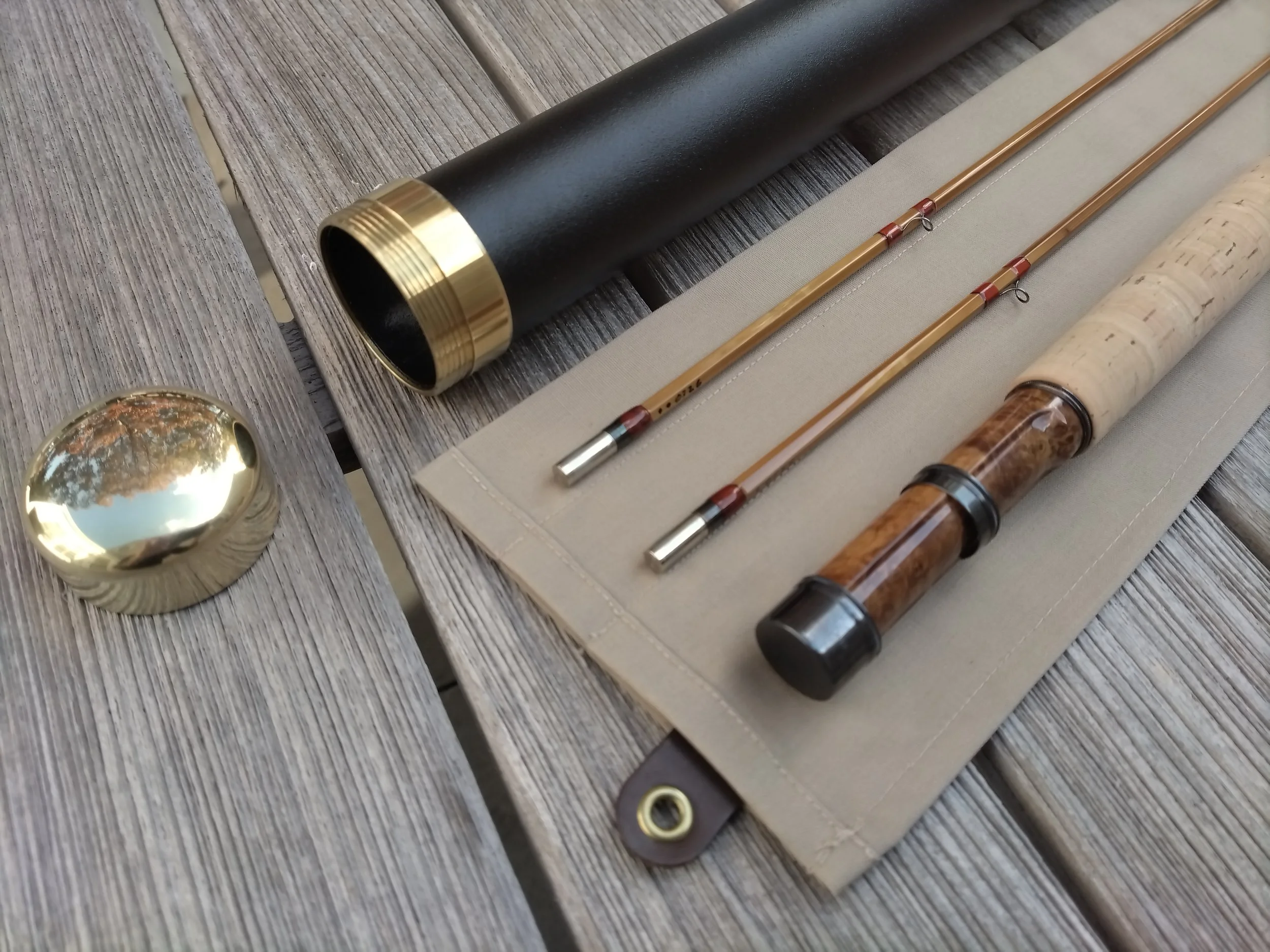
The 7’ 3” grand raffle prize rod
Photo by Chuck Neuner
SS: I’ve learned a ton about bamboo rods from speaking with you, and I’m excited to get back out on the water and fish some bamboo. What part of the rod-making process do you enjoy the most?
CN: Like most people, I enjoy the planing process. There’s something quite satisfying about that motion, with the blade going through the bamboo. I use whetstones and Japanese Nagura stones, and they take a nice razor edge on them.
I think of it more as a craft than an art. There’s something embedded in human nature that takes satisfaction from creating order out of disorder. When I look at the comb and its organic form, and later I see what I end up with, sometimes I still don’t quite believe I made it. As a human being, I stood in front of this organic thing that was amorphous in shape, and using a rudimentary technology I made an object that’s accurate to within thousandths of an inch.
I'm friends with some luthiers, and they have the same experience. I’m not too far away from John Monteleone’s guitar shop. We get lunch sometimes and talk about varnish and glues and all kinds of wonky stuff. But it’s the same thing. He starts with blocks of wood and then one day there’s a guitar. You can’t quite believe it. That’s how I feel about bamboo rods: When I see what’s in the tube, sometimes I can’t even remember how it all happened. It’s very peculiar.
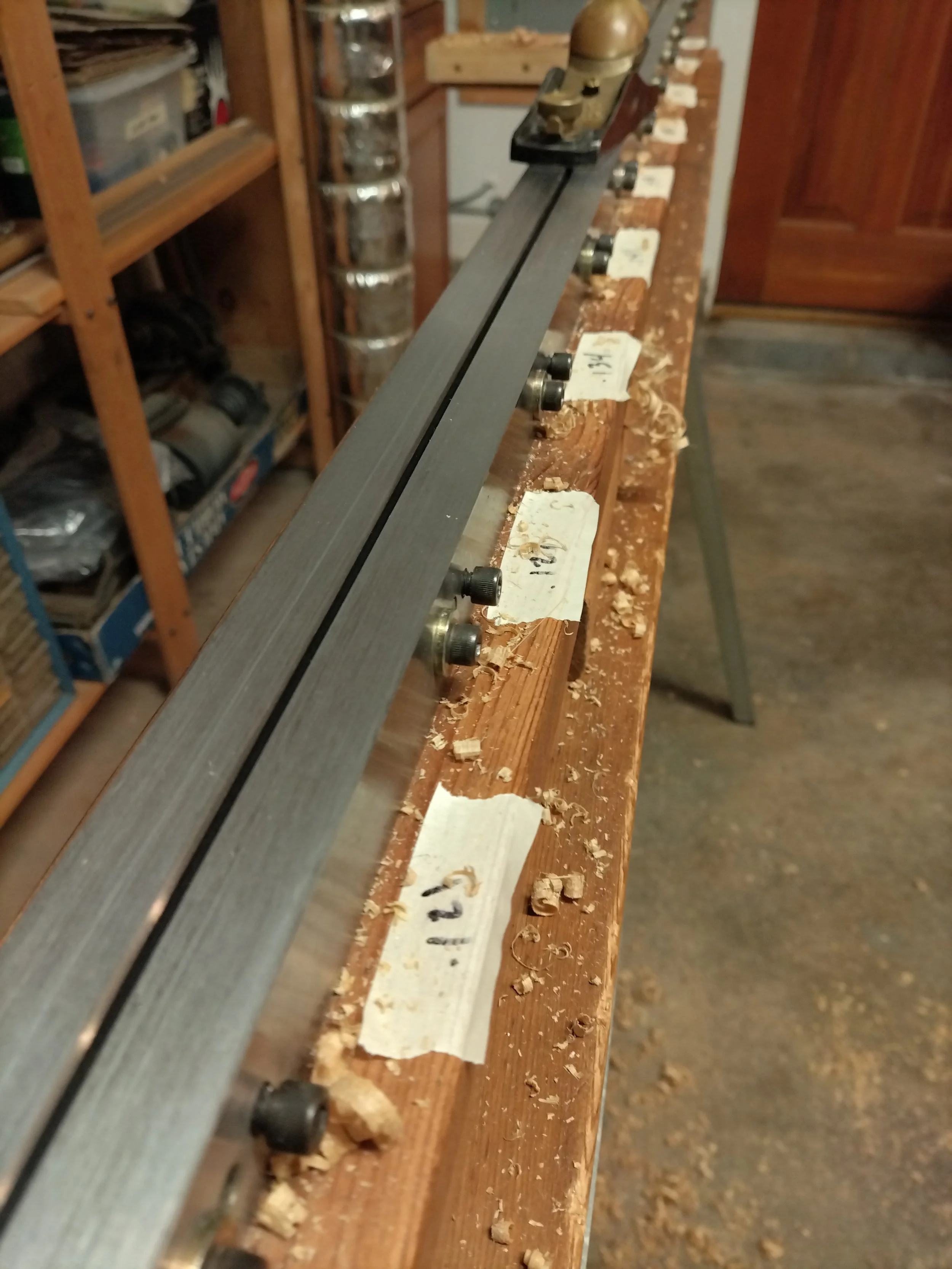
Hand-planing the blank to achieve the desired taper
Photo by Chuck Neuner
JR: We have one more question for you, our “last cast” question that we ask everybody. Is there a particular project or cause that you want to spotlight?
CN: To put a bow on what we talked about earlier, one thing to spotlight is getting young people involved at a formative time when they can get passion about fly angling and conservation. And also to get people to look at our challenges with a more strategic perspective, instead of playing whack-a-mole every time a problem comes up that has to be addressed in the next five minutes.
We need to take a more strategic view of the nature of development and stay aware of what’s happening in our local communities. Take a strategic view instead of becoming aggravated the first time you read about it in a magazine. That’s not the time to be concerned. The time to be concerned is when you hear about policy changes that, when you put two and two together, could lead to an environmentally deleterious situation.
JR: Chuck, thank you for taking time to speak with us. It's been a pleasure speaking with you.
SS: Thank you, Chuck.
CN: Thank you, gentlemen. It’s been great.
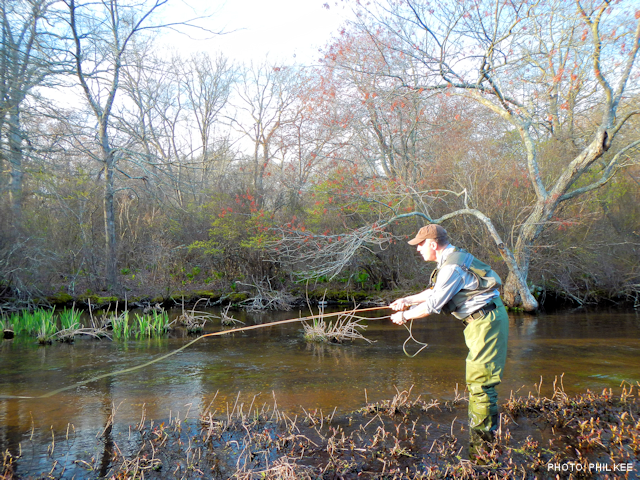
Practicing patience and hope, and looking for trout
Photo by ???
JR: Is there something in particular that you would like to pass on to the next generation of rod builders?
CN: I'm a past President of Art Flick TU, and a past Vice President and Conservation Committee Chairman of Theodore Gordon Flyfishers. Through those organizations, I met a lot of young people who were very interested in rod building. Some of them took it up, some didn't. As far as rod making is concerned, I don't proselytize about it. I help people if they need help.
Over the years I found I took on a sort of tough love approach. It's the best way. Someone learning can't do anything unless they make some mistakes. I've had people ask me how to get from point A to point B, and I'll tell them. They'll ask me what went wrong here, and I'll tell them. They'll ask me for some advice, and I'll tell them. But I haven’t sat someone down in front of a planing form and showed them how to make a rod.
There are a lot of classes now where people can go to learn rod building, like Bill Oyster’s. They do a terrific job of getting people engaged in it. I know some people who have gone to the Oyster training, and they’ve come back with a passion for and interest in it that they wouldn’t have had otherwise.
JR: Let’s change gears for a minute to talk about conservation. What's the most important thing we as anglers can do now to make sure fishing is good for younger people?
CN: That's an expansive question. There was a point in time, long ago, when the fewer people that fished a river, the better it would be for that river. We live in a very different time today. Art Lee, who was a writer for Fly Fisherman Magazine for many years, said that a river that nobody knows has no friends. His attitude was, we’re at a point where if people don’t fish a river, they don’t care about it, and if they don’t care, they don’t vote. If they don’t vote, the river will be developed, and that’s the end of the river.
What we can do today is get young people more involved in what happens to the river. Keeping an eye on newspapers and the press to see what’s coming down the pike that may threaten a river. From an environmental perspective, it’s getting people involved from a more strategic position from 10,000 feet, rather than showing up at the water to find that somebody put in a culvert or somebody’s building a dam.
JR: Those can be tense situations when they get to that point.
CN: Yes, and they can be avoided more simply by getting involved upstream, as it were. I’ve seen that happen with the Carmans River, where TGF and TU were involved. TU stopped the development of a Home Depot that would include a big parking lot abutting the river at a sensitive point.
Some brook trout were living on the side of the river in a micro-environment. It was brackish water, but there were enough springs coming out of the ground that it created a freshwater area. There were brook trout feet away from where you could catch blue claw crabs.
TU got involved early enough that we got in touch with the people trying to stop it, and we helped stop it. Home Depot simply found another place to build a store.
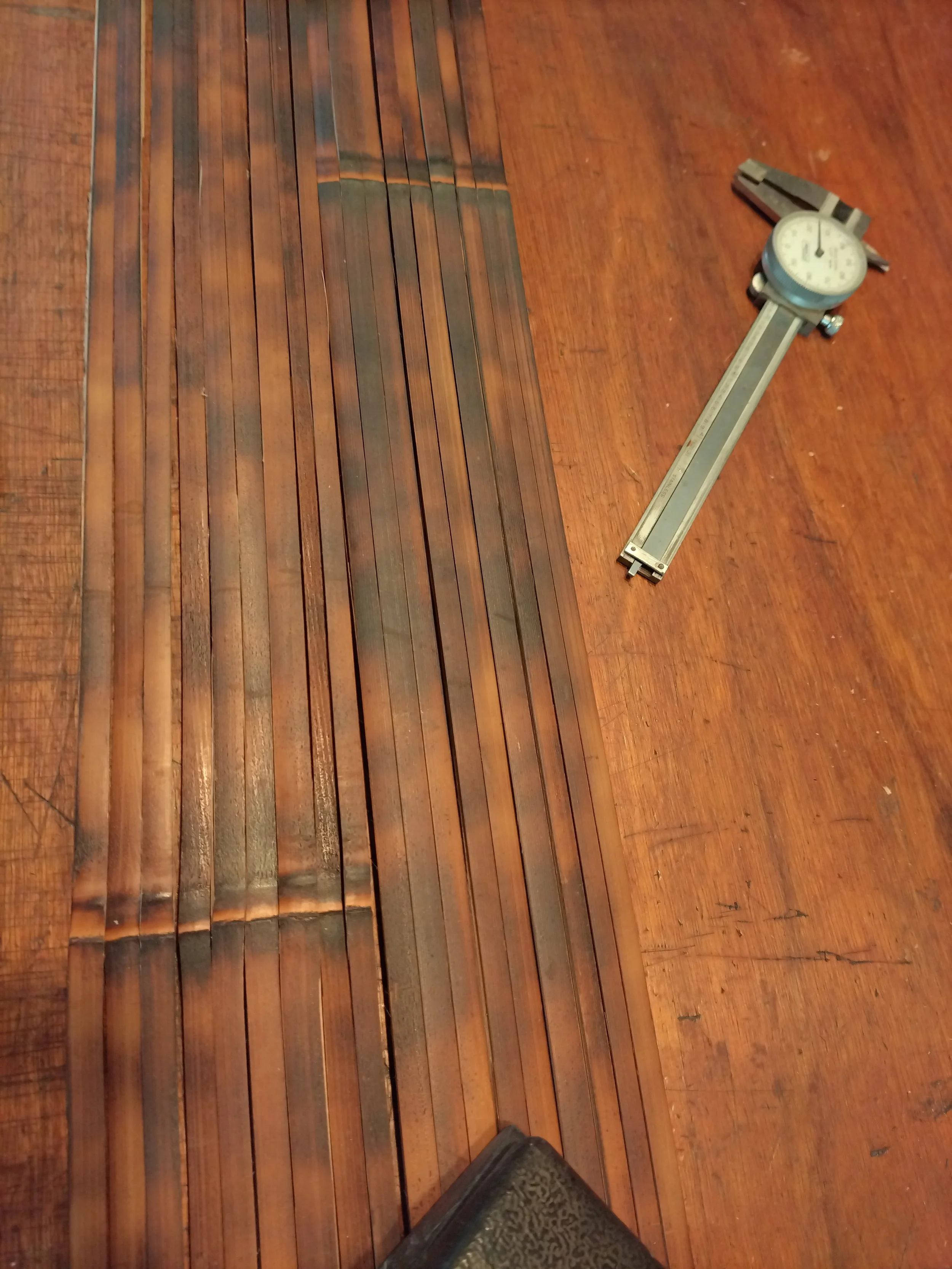
Split bamboo ready for the next step
Photo by Chuck Neuner
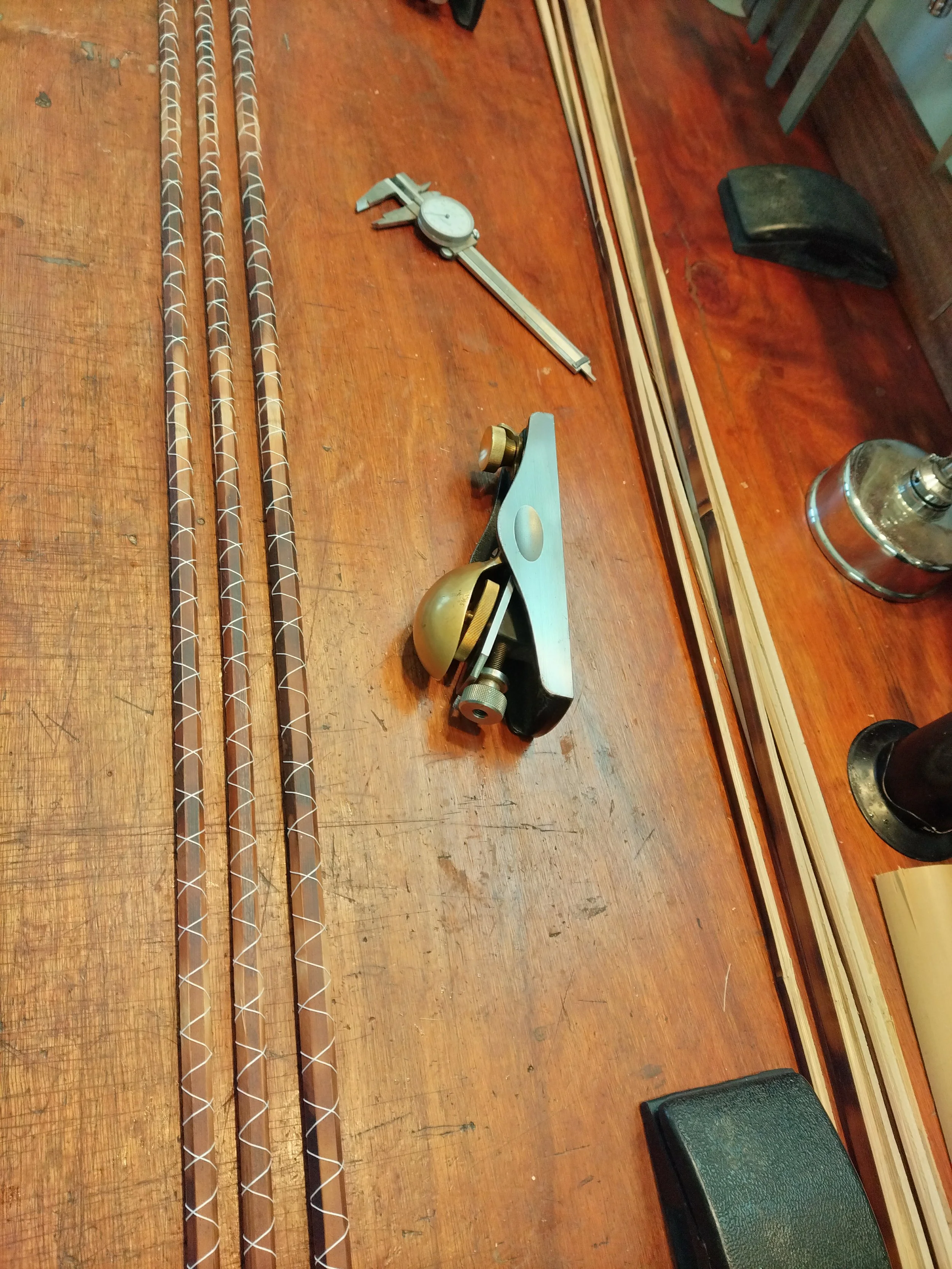
Bamboo blanks
Photo by Chuck Neuner
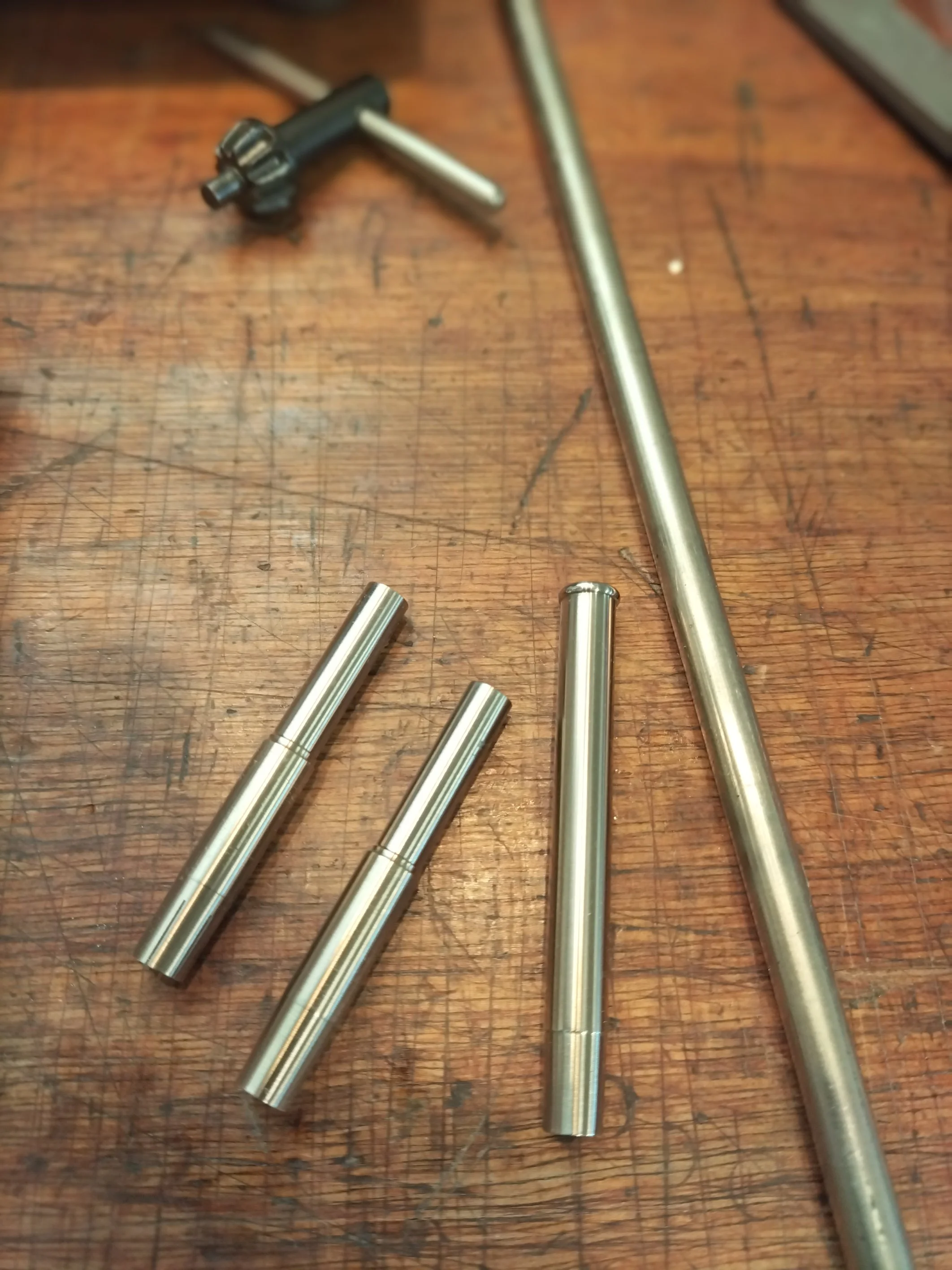
Machined ferrules
Photo by Chuck Neuner
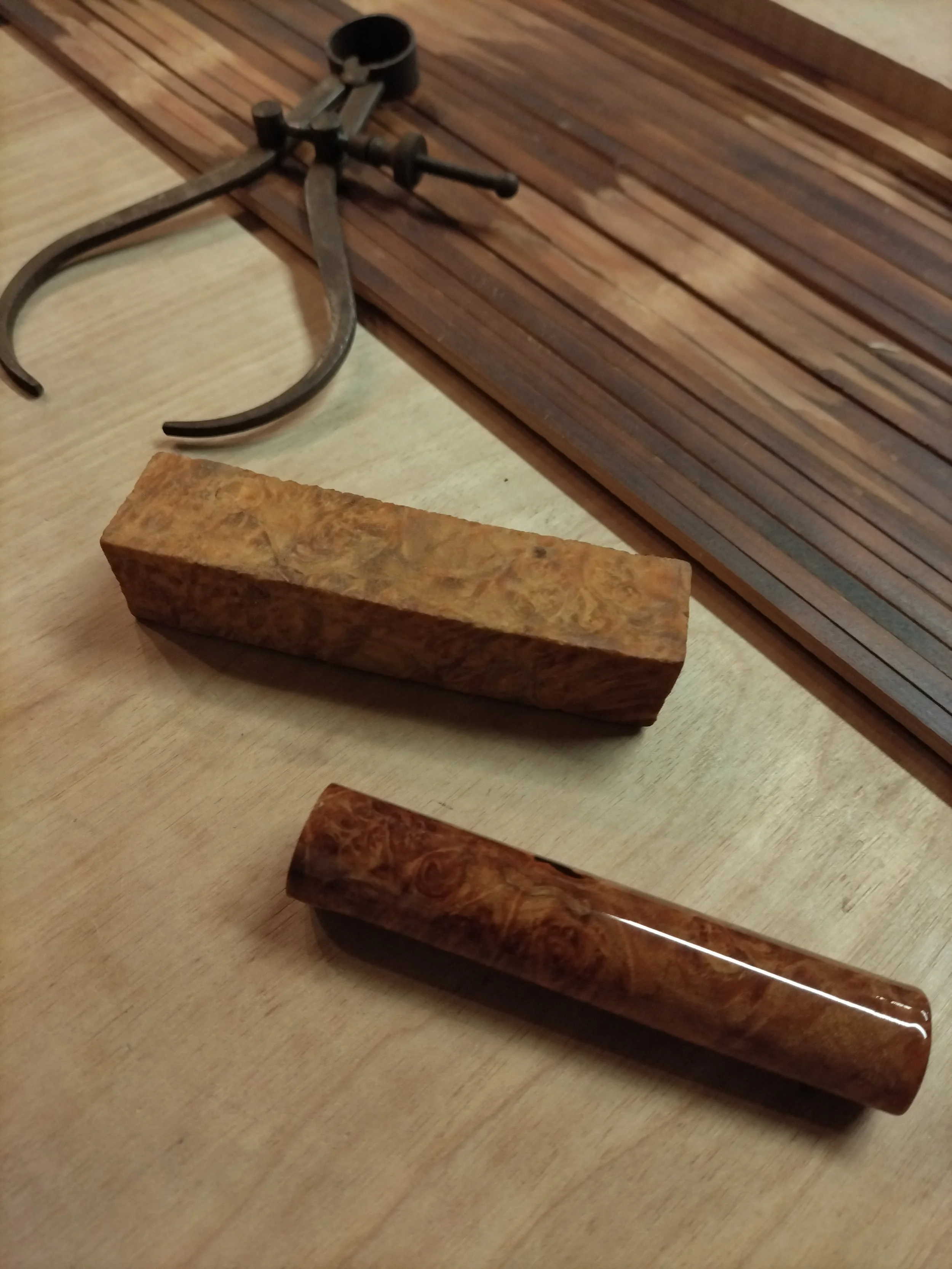
Amboyna burl
Photo by Chuck Neuner
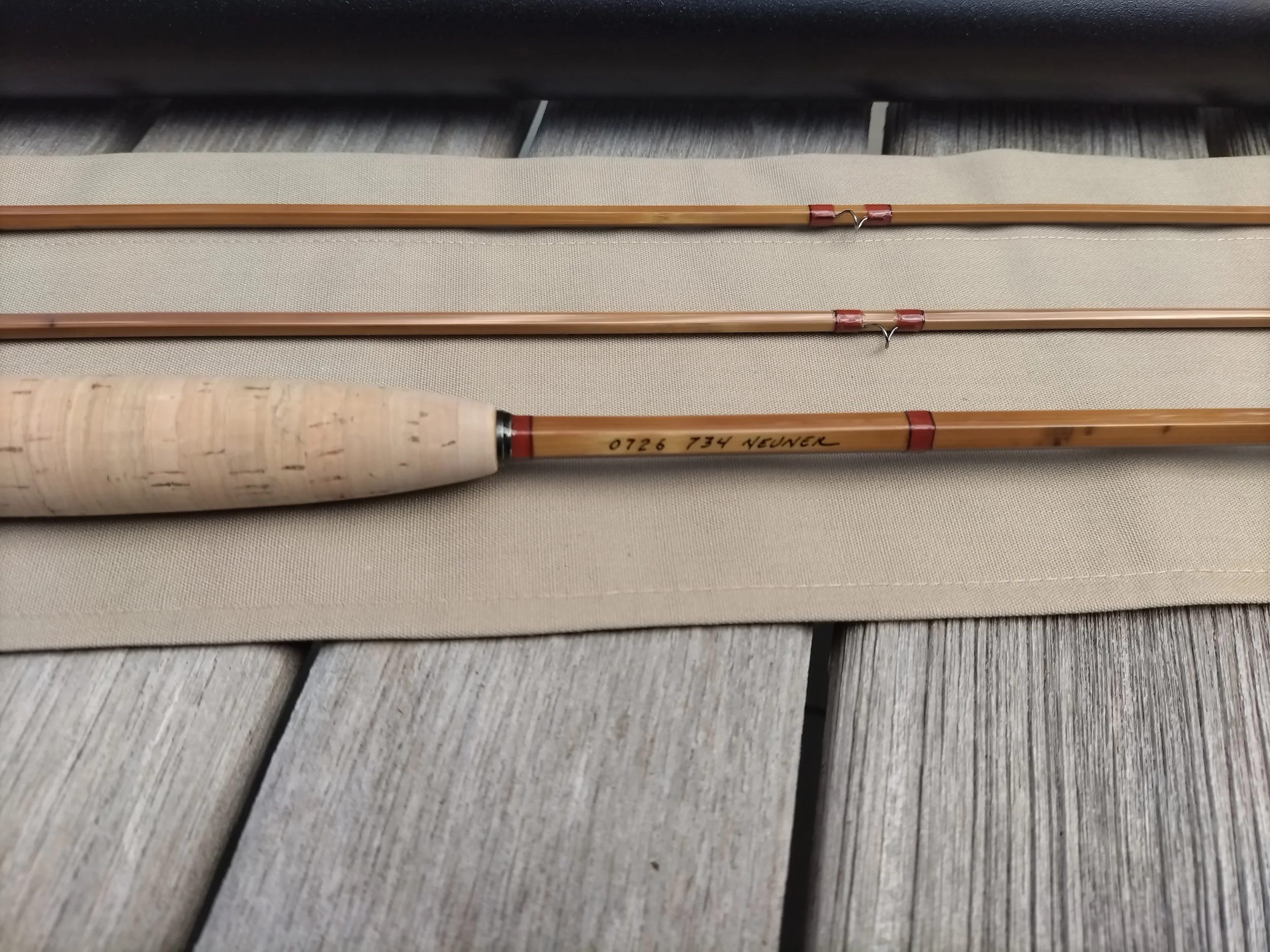
Hand-numbered above the grip
Photo by Chuck Neuner
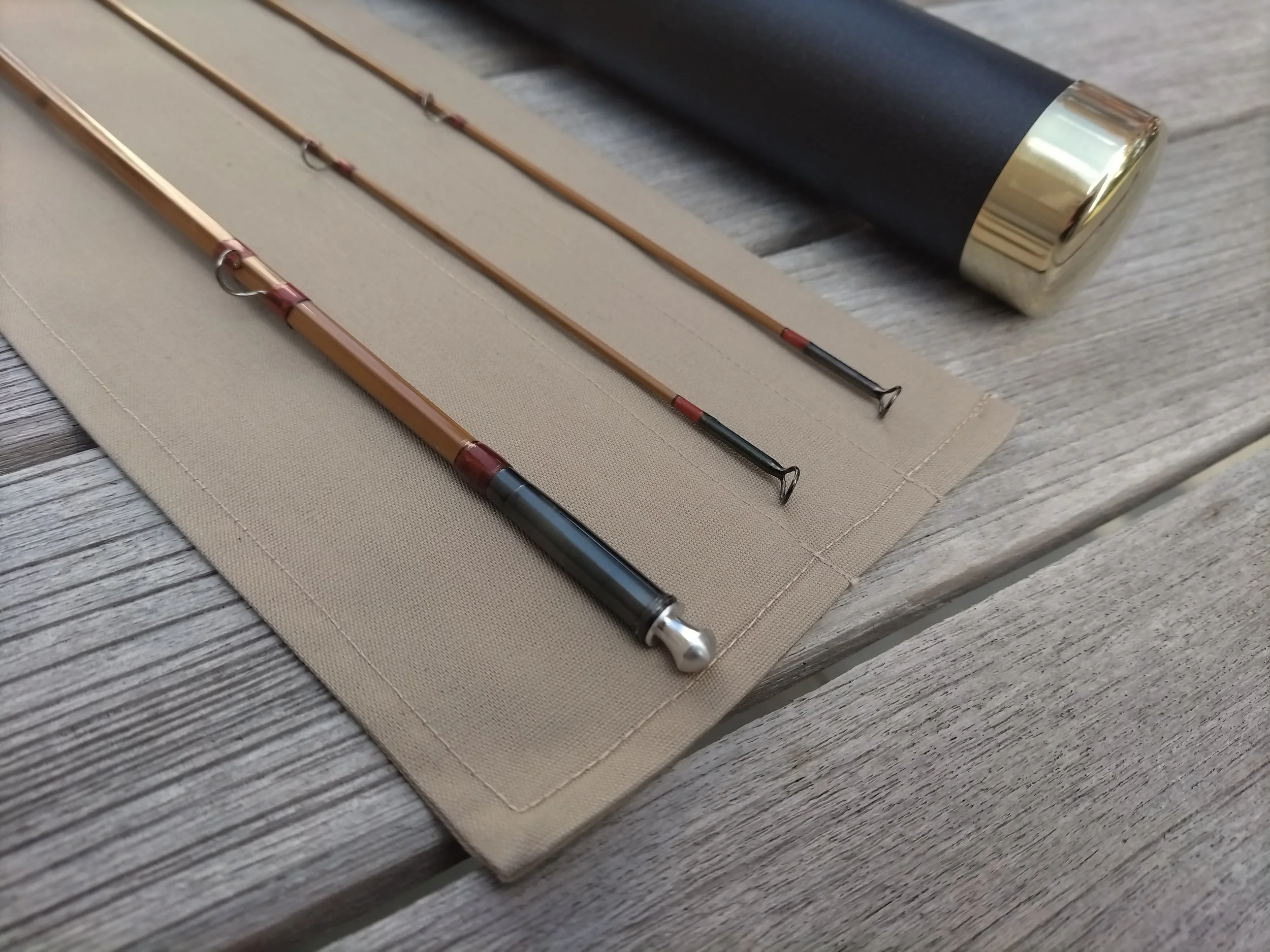
Two rod tips
Photo by Chuck Neuner
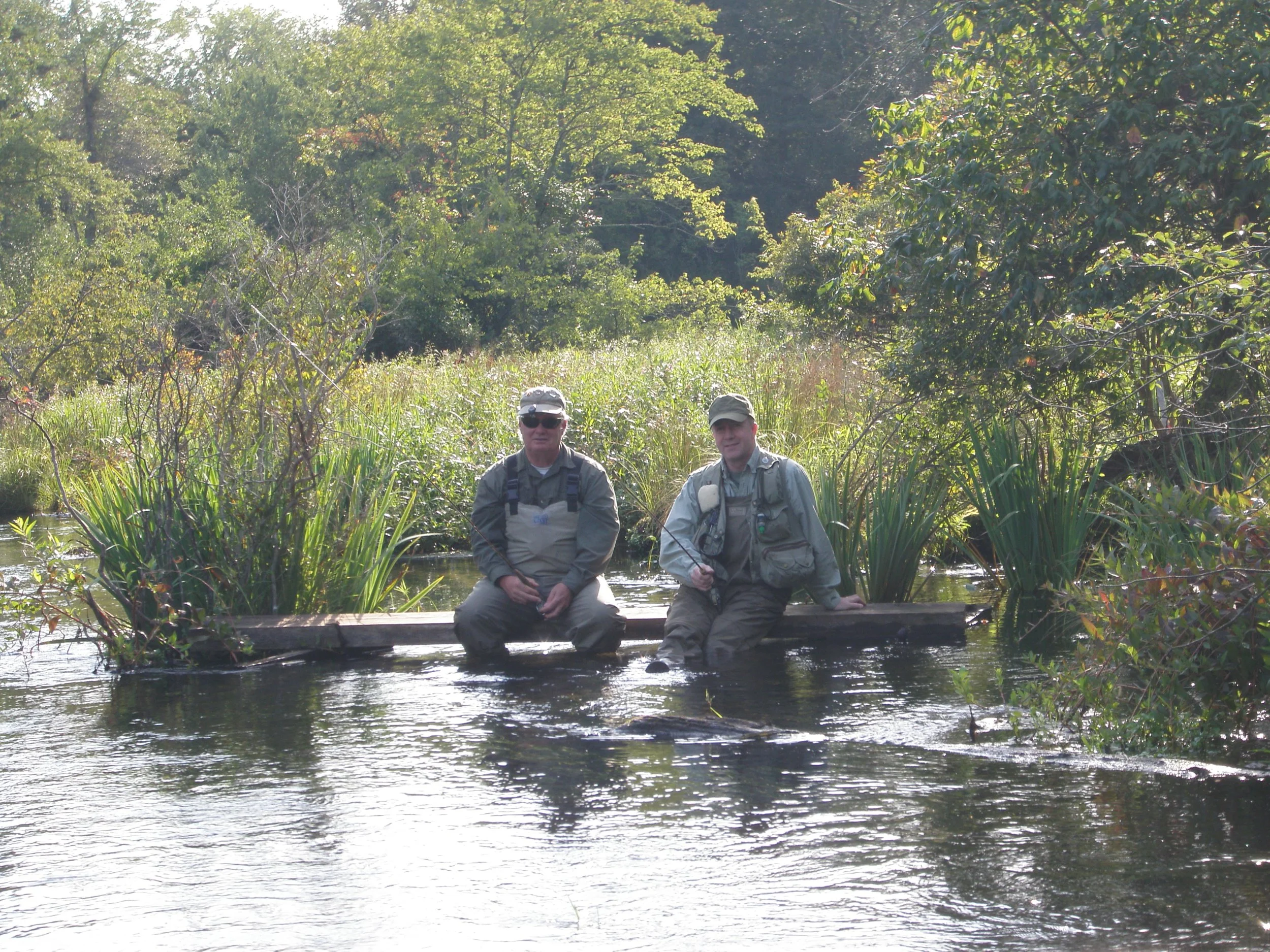
Rich [Last Name?] and Chuck on the Carmans
Photo by ???