
Sausages, Pies, and Pasta: In the Stream with Chef Jake Eberle
By Josh Ethan Johnson and Jason Rintz
After 18 years of professional cooking in New York City, Chef Jake Eberle and his wife Caroline jumped at the opportunity to realize a long-time dream of owning a small inn. When they learned the North Branch Inn was available, they knew the time was right.
Prior to moving upstate, Jake owned Michelin-recommended Le Fond in Greenpoint, Brooklyn, which was named one of Conde Nast Traveler’s Best New Restaurants of 2014. Jake, a Cordon Bleu alum and veteran of the kitchens of La Roche Le Roi in Tours, France, brings his French technique and training to an American concept at North Branch Inn.
When Jake isn’t in the kitchen, you’ll find him knee-deep in the cool waters of the North Branch of the Callicoon Creek, looking for big brown trout. Jake recently sat down with NYC Trout Unlimited to talk about cooking, learning how to fly fish, and making the big move from Brooklyn to North Branch.
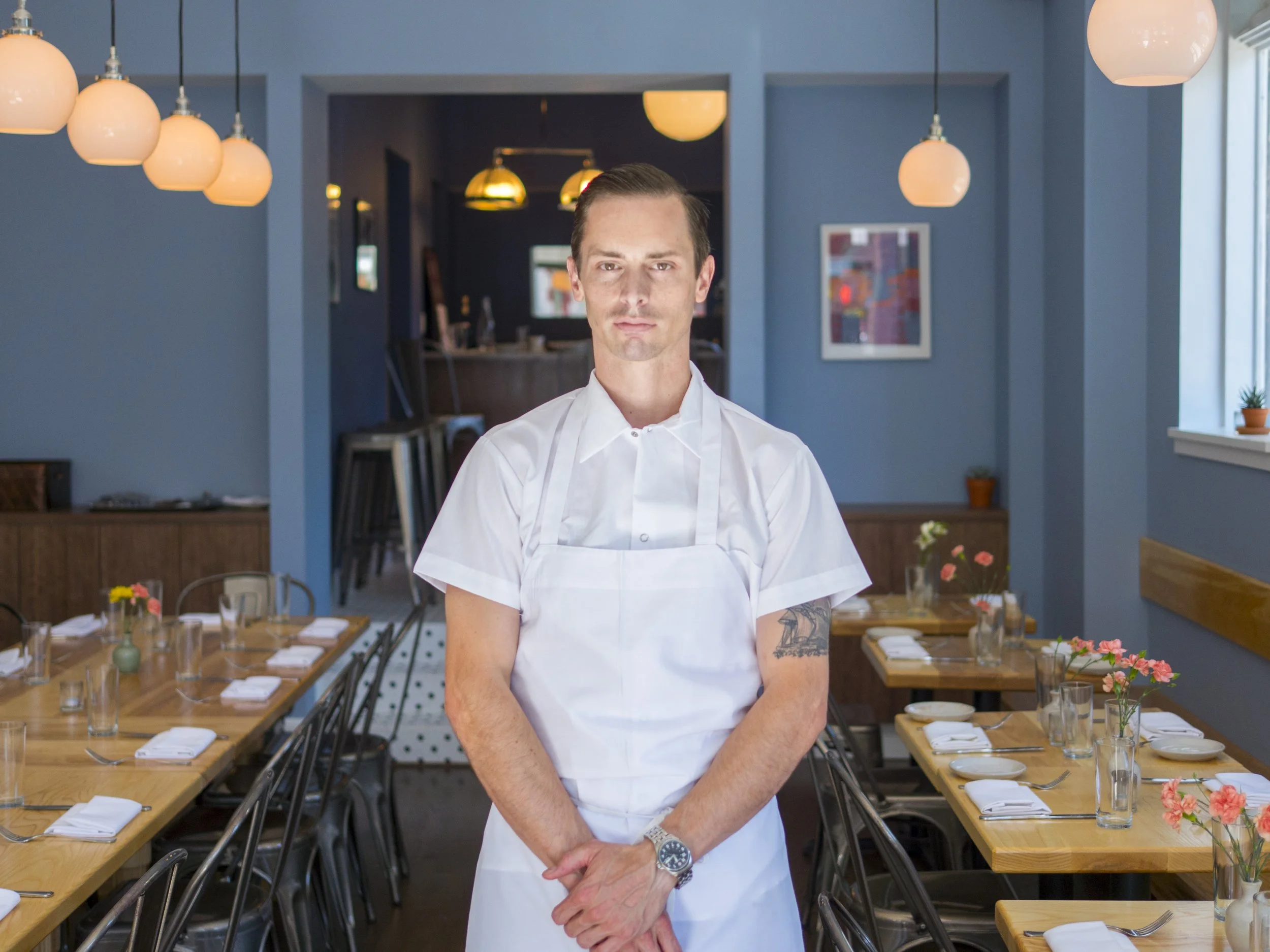
Chef Jake Eberle at Le Fond
All photos by Josh Ethan Johnson
Jason Rintz: Jake, I appreciate you taking time to chat with us. It was nice meeting you at The North Branch Inn in April. To start, how did you and Josh first connect, and when did you start fishing together?
Jake Eberle: We met in 1999 at a Guided by Voices concert. Every summer, my college—Carleton College in Northfield, Minnesota—held an outdoor music festival, and that year Guided by Voices was the headliner. Josh was an art student in the Twin Cities and he would come down to our college and visit his high school friend. I discovered fly fishing thanks to Josh in 2020 when I had time on my hands because of Covid. He had a car and extra gear and a lot of patience.
JR: Was that the first time you fished with a fly?
JE: I’m from South Portland, Maine, and growing up my family had a house on a lake. We had a boat, canoe, and little fishing poles. My dad took me out a couple of times spin fishing with worms, but he was not a passionate angler. He definitely wasn't a fly fisherman. Before 2020, I'd probably been fishing three or four times in my life.
Josh Ethan Johnson: I lent Jake the rods and equipment, and early on I paid for gas and tolls in exchange for Jake making an amazing riverside breakfast and lunch. I still have some photos and memories of that food. It was a good exchange.
JE: At that point I had a restaurant in Greenpoint and I had weekends off, because the restaurant was more or less closed. We were doing only delivery and takeout, and so I pieced together a meal from whatever I was using for to-go meals. I remember riding my bike with a milk crate strapped to the back with my waders falling out, the three flies I owned at that point, and boxes of, like, rice and sausage.
JR: What was your initial interest in fly fishing? Was it Josh telling you about it and you had the time, or was it always something you were curious about?
JE: I wouldn't have had any interest if it wasn't for Josh. There are a lot of barriers to entry for fly fishing: access to water, equipment, someone to teach you. I probably would have been more likely to pick up say pickleball if it wasn’t for having a friend with all of those things. What I liked about it was being in the woods. I’m not a natural; I didn’t pick it up quickly. I think I went fishing five times before I actually caught a fish, so it was being in the woods, being in nature, getting out of the city, trying something new. I really didn’t even know I liked nature at that point. I’d been so focused on my career and being in the city.
JR: The pandemic changed a lot for a lot of people, obviously, and it pushed a lot of people outdoors. It sounds like it did that for you, too. Do you remember the first trout you caught on a fly rod?
JEJ: I remember it, Jake.
JE: We went on three fishing trips in those early days. Was it when we went camping with Adam on the Farmington River?
JEJ: No, I don't think so. It was the stream in Jersey, where they stock it pretty heavily.
JEJ: The Pequest Trout Hatchery is right there.
JE: Yeah. Freezing cold day. I remember that. I didn't have a good time that day. I wanted to leave the whole time. I also remember that while we were there, I got a call from an employee telling me that he had just tested positive for Covid. That was the first person in my immediate circle to have it, and I didn't know what I should do, personally or for the business. I didn't know what the responsible thing was. Josh said, “Do we need to go home?” And I was like, “I don't think so.”
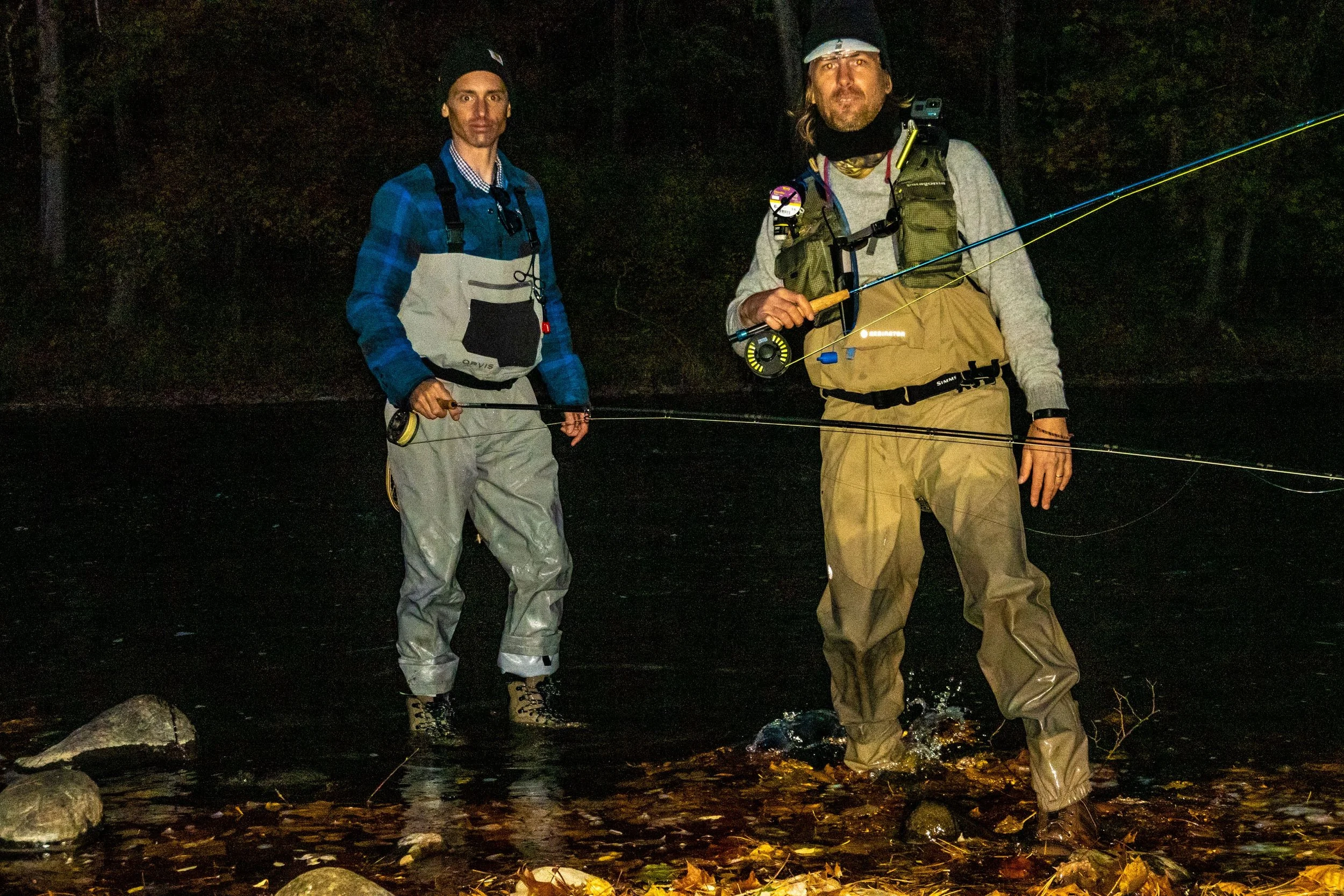
Jake and Josh, wadered up
JR: That was such a strange time, especially early on when we didn't know very much. Restaurants were enormously impacted by shutting down or switching to take-out only. What was that like for you, running a restaurant and navigating that time?
JE: It was actually easier for small restaurants than for bigger ones, because I could go in with one employee to work the cash register and make all the food we needed for the day. I was able to limit the menu and execute it by myself. The community general was and is very supportive of everything we were doing. Even if they understood that it wasn’t exactly what I wanted to be cooking, they would support us.
The uncertainty was scary. I remember hearing about grants and financial aid, things that the government was offering, but then also having this fear that the money would run out because there were technical glitches with the websites when the applications would go live. There's still one grant that I'm waiting to get.
Aside from that, it was kind of a good time for me, because I had time off for once. I had time in the kitchen to refine what I was doing and work on new things. And I had time to explore other things like fishing. But I'm glad it's over. I don't want to go back to that.
JR: I imagine having people depending on you made that period even tougher. I’m curious, do you see any interplay between your professional life and fly fishing?
JE: Maybe not fishing itself, but with fly tying, yes. A lot of what I do at work is small, intricate things with my hands, and that carries over to fly tying.
JEJ: You are a very laser-focused person in the kitchen. You're willing to work 16-hour days. You do not make mistakes. I think fly fishing lends itself well to that focus. I see a big overlap with your ability to really commit and be okay with failing and trying again and know you’re going to get better incrementally.
JE: It's the complete opposite of our society and culture now, where everything is on social media for 24 hours, or when you're scrolling and looking at things for less than a second. At work, a lot of my prep jobs take an hour or more, and I’m doing one task over and over again. I think that's what Josh is getting at. I’ve always been able to concentrate on one thing for a long time without getting bored.
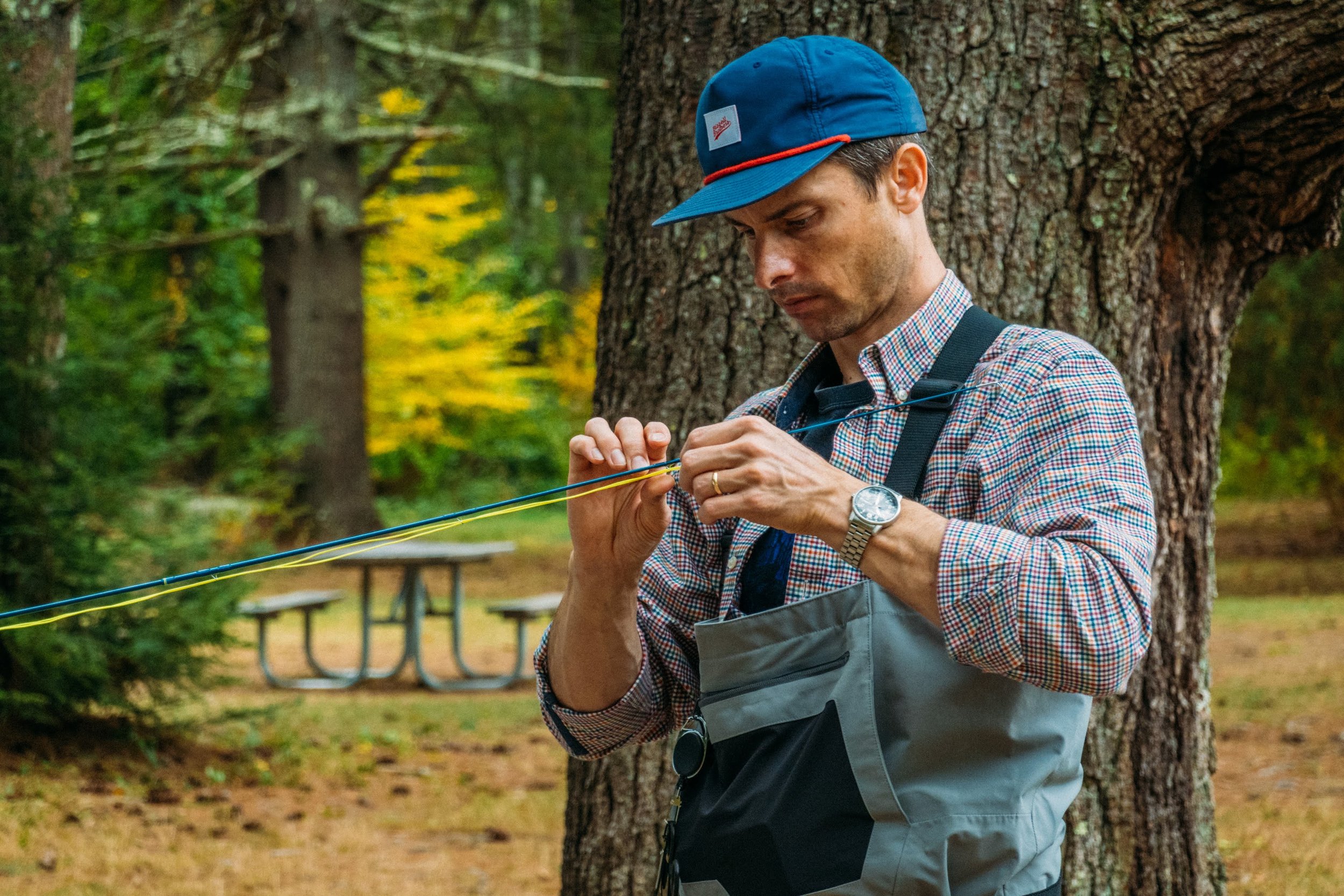
Intense focus
JR: It’s a good skill to have. That type of focus is admirable. How and when did you decide to become a chef?
JE: It's really the only job I've ever had. I grew up working in restaurants. I started washing dishes when I was 16 and I took on more responsibility at this one restaurant where I worked as a kid every summer. It wasn’t until after college that I decided to go to culinary school and make it my career. I was a good student in high school, and I knew I wanted to go to college. Then, after I’d invested so much time and money into college, I was afraid that I’d be wasting that education if I didn’t do something that required intellectual thinking and whatever else they teach you in school.
I have the kind of parents who will support anything I want to do, and they were also into eating good food. I think selfishly, they didn't mind seeing me become a chef. I had knee surgery the summer after I graduated from college, and I went back home and recovered from that. I spent a lot of time with my parents talking about what I was going to do. They were supportive of whatever I wanted to do, and that’s what gave me the confidence to go to culinary school. After I made the decision to be a chef, I knew I wanted to own my own restaurant, because with something so creative it’s hard to have an owner telling you what to cook. That was an easy decision.
JR: What are some things about New York City kitchens that people don't know?
JE: These days, like with the big Noma scandal recently, I think people know everything. It’s all out there. But there are good places to work. I’ve had good bosses. Having one or two good mentors, one or two good opportunities to work for patient, decent, and talented chefs, is really all you need. You just need a couple of opportunities to get your foot in the door. I had that a couple of times, and in both situations those chefs gave me the opportunity to explore creatively.
Once you have the confidence to make mistakes and experiment, it helps your growth. It's kind of like speaking a foreign language. When I was a student in France, I was trying to learn the language, but I wasn’t very good because I was still self-conscious in a lot of ways. When I went back as a tourist many years later, without having studied, it was a lot easier to speak because I was more confident. The same is true of cooking. If you’re not afraid to make mistakes, if you’re not afraid of your boss or co-workers making fun of something that didn’t quite work out, it’s a lot easier to grow.
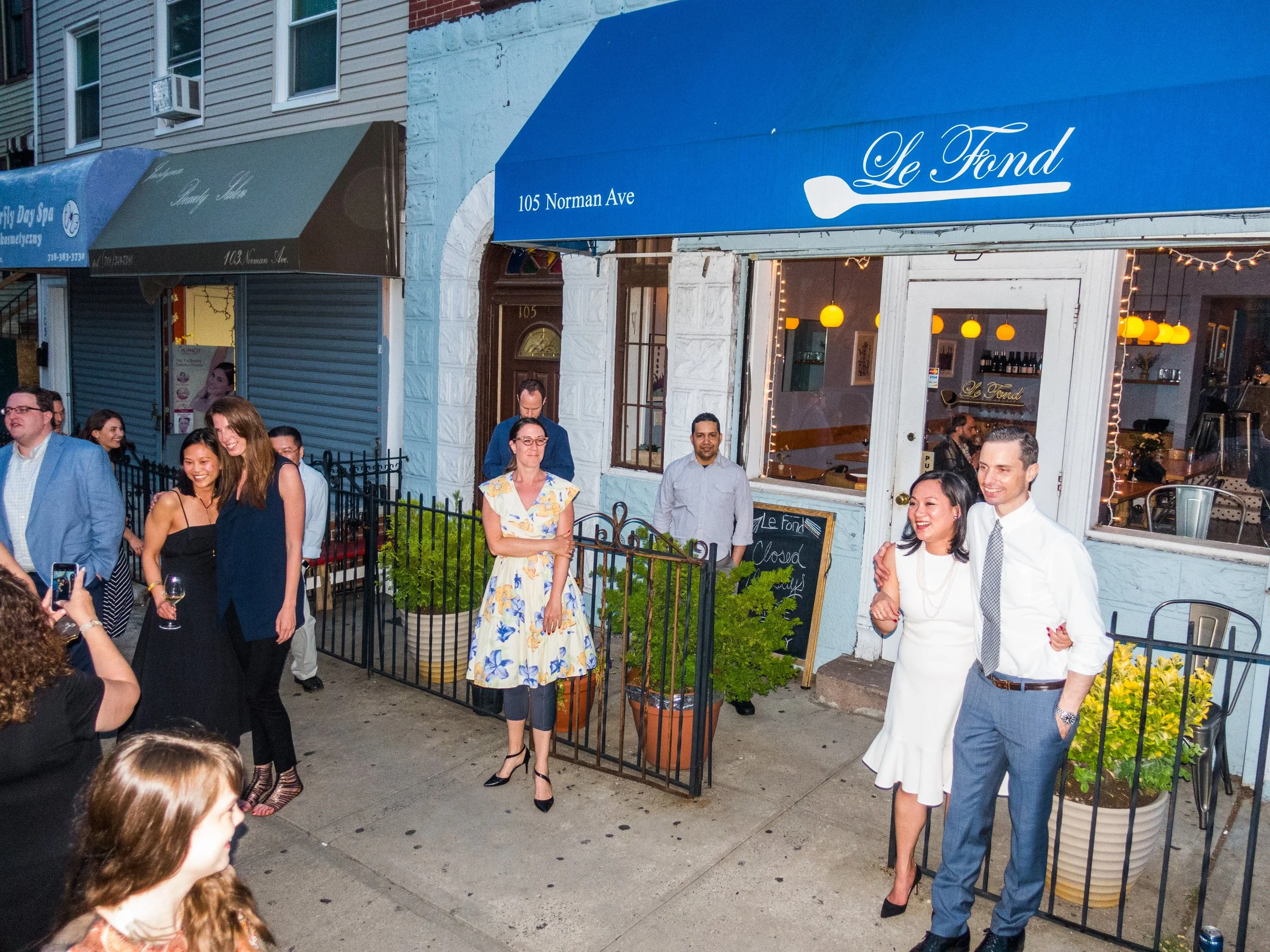
In front of Le Fond
JR: You ran Le Fond in Greenpoint for nine years. Looking back on it, what was the most satisfying part of that 9-year run?
JE: I had one partner when I started Le Fond, the 84-year-old Polish woman who owned the restaurant before me. That was wild, because we couldn’t speak to each other. Her English wasn’t good, and I had no Polish whatsoever. We had to find a translator from the neighborhood to communicate with each other. I was able to buy her out after a couple of years. From 2017 or so onward, I was the sole proprietor, so I didn’t have to answer to anyone. And now I have only my wife as a business partner. It’s really difficult to have partners. It’s hard to have people having influence over your creative decisions. I think the best restaurants are where there’s a sole proprietor, where the person creating the food has the final say.
I don't think I answered your question, though. Can you repeat it?
JR: I was curious, when you look back at running Le Fond, or maybe now with the North Branch Inn, what's the most satisfying part?
JE: I’m just excited about making sausage, you know? I just got back from Asia. My wife is from the Philippines. We spent three days in Hong Kong, then I was in Manila for three days. We went to this very expensive, very fancy restaurant, and the courses were gimmicky.
After having done this for about 30 years, I know what I like to make. I know what I like to eat, and it's sausages, pies, and pasta. At one point, I had the idea to open a restaurant only serving those three things. I don't think that's a good business move, but it's what I would love to do.
To answer your question, if I'm ever having a bad day or things aren't going right, if I can stop what I'm doing and do one creative project, it changes everything. My whole mood changes. If I get up in the morning and I know that I get to work on something like that, that’s what really is most rewarding and satisfying.
JEJ: Seems like it's more about the process versus the result.
JE: It's nice to get compliments on a dish, but yeah, making something and having it come out the way you want is for me the greatest satisfaction.
JR: It sounds like a healthy way to seek validation, looking for satisfaction in the process. And if the kudos never come, so be it.
JEJ: And is there a parallel between that and fly fishing? What's more fun, the actual thing of being out there or the stupid pat on the back you get from three Russian robots liking your thing on Instagram?
JE: I like the word “validation,” because it's something I’ve thought about a lot since moving to the Catskills. When you're in the city, there are a lot of concrete goals that you have. You know you want reviews, you want dining guides to recognize you. There are a lot of ways to feel validated there, and in the country, they don’t exist. Here, if you're making your customers happy, then you're doing your job well.
Fishing is a lot like that. The things that you do by yourself in the woods, no one ever sees or appreciates. All of the flies that you tie? No one is ever going to see them. It's just about being on the water.
JR: You mentioned sausage being really interesting to you right now. What else is most interesting right now in terms of your menu?
JE: The reason that I like sausage, pies, and pasta is because they're transformative foods to make. The ingredients you start with don’t resemble the finished product at all, and you really feel you’ve created or achieved something. It’s the same with charcuterie in general. I’m making a prosciutto right now, and it takes a year. There’s the anticipation of having it aging, not having any idea whether it’s going to work out or be good. That kind of waiting in anticipation is rewarding for me. There are so many ways these projects can go wrong, and the feeling of risk is exciting, too.
JR: I have one more food-specific question, and it’s a two-parter. First, what's your favorite meal you've ever cooked, and second, what's your favorite meal you've ever eaten?
JE: I have a little Japanese charcoal grill, and everything I cook on it is my favorite meal that I've ever cooked. It's really great. I like cooking over an open flame. It’s very primal. You feel like you’re actually cooking when it’s over charcoal.
And I would say the noodles that my wife cooks are probably my favorite meal I’ve eaten. She makes this dish called pancit, which are very, very fine egg noodles. She puts ground pork and bell peppers in it. I’d never had anything like it before she made it. The fact that it was new and delicious really worked for me.
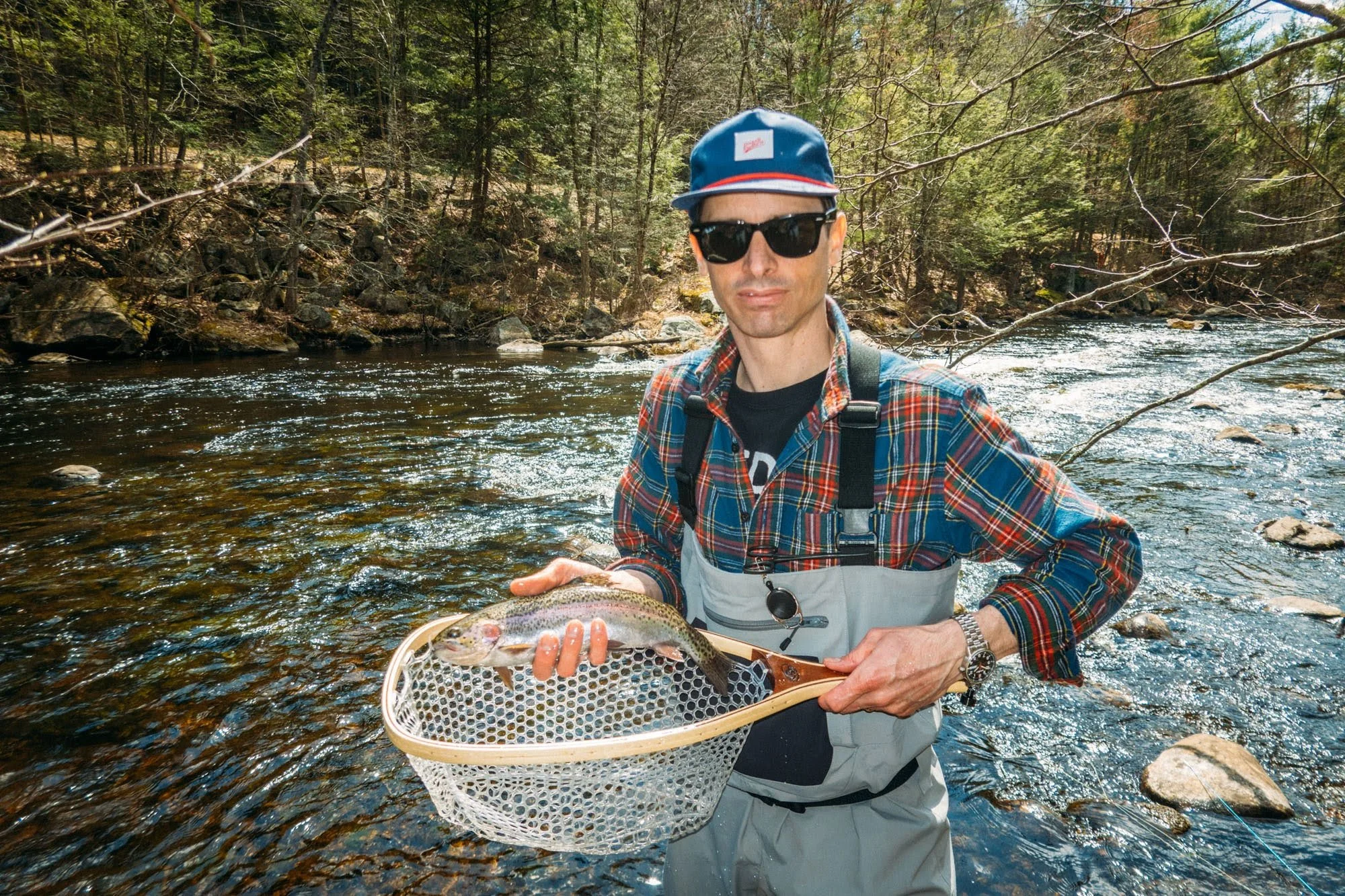
Rainbow, just out of the net
JR: Switching gears a little bit, I wanted to ask about your move. It’s a big transition to go from Brooklyn to the Catskills, I would imagine. What was it like for you?
JE: The experience of moving was absolutely terrible. We closed Le Fond on October 21, 2023, and I had to move the apartment that I'd lived in for 15 years, plus an entire restaurant, two hours upstate in nine days. I don't remember when we got the keys, but I packed between October 21 and November 1, and we were doing the bare minimum renovations to open, and we had an event two weeks later. It was absolutely mental.
I can’t remember how many times I drove back and forth from Greenpoint and North Branch. I crashed a U-Haul truck, which was terrible. Opening a restaurant is really hard, and on top of that there was the inn business and the events business. There were three really crazy things happening at once, and we were trying to move into our home. It was overwhelming for about six months. For another year after that, it felt like we were barely hanging on.
People asked me if I was glad to be out of the city. I didn't move out of the city because I hated it or was tired of it or anything like that. I did it because I lost my business, and because I didn't want to start another business in the city. I didn't want to rent another restaurant, and I just didn't have the means—without taking on a lot of investors—to buy a building in New York City.
We never owned a home and that wasn't going to happen in New York. A lot of things just happened at the same time that made it clear this was the next phase of my life.
I still love visiting, though. I have a great time every time I go back to the city. I miss the restaurants, having as many dining options. If I weren’t so busy and immersed in what I’m doing up here, maybe I would have time to feel homesick or nostalgic. But for the most part, I’m completely happy here. The community in North Branch has been so welcoming, accommodating, and supportive. Two and a half years in, I feel comfortable. I feel accepted.
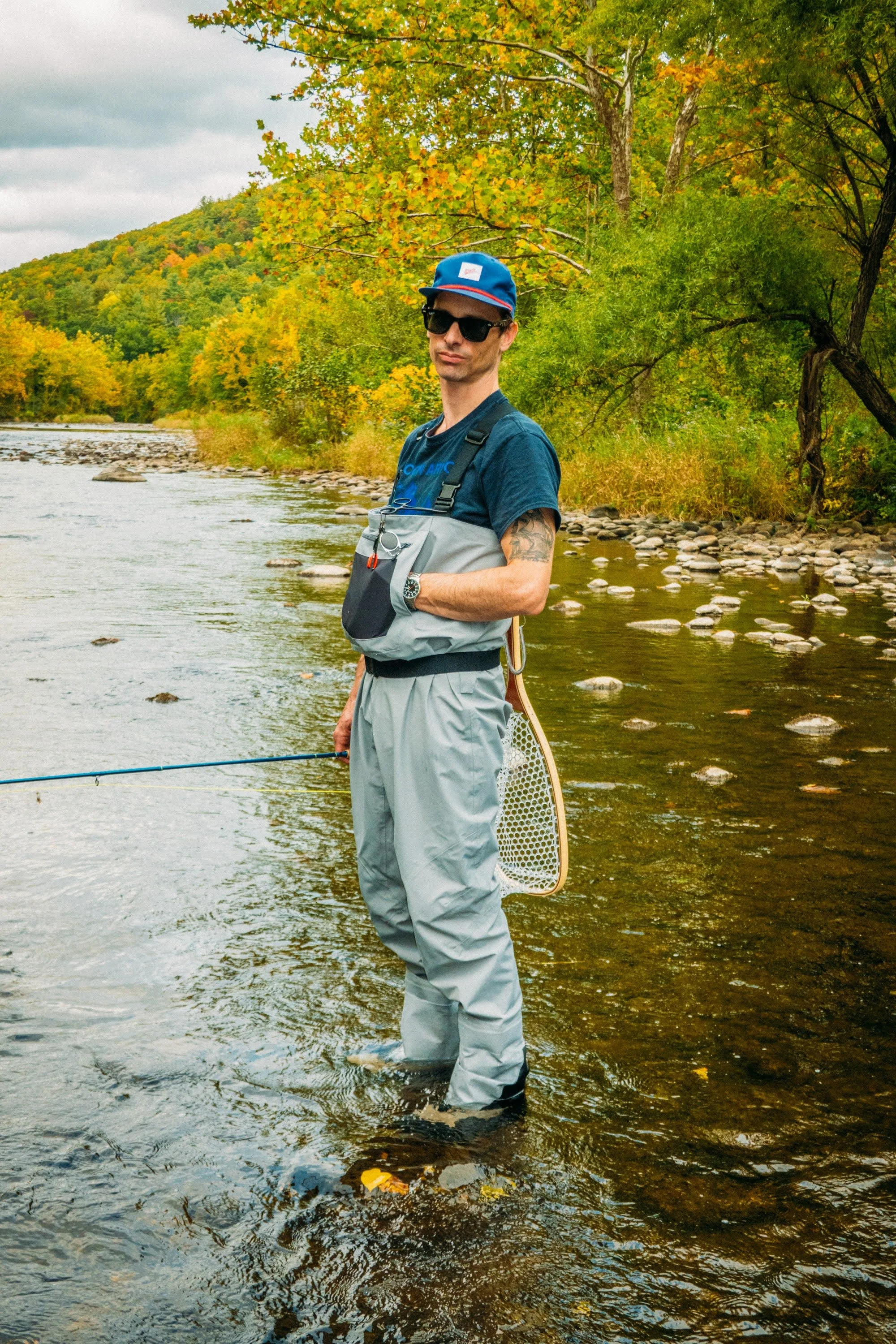
Chef on his day off
JR: Let’s circle back to the question of what advice you’d give someone contemplating a move to the Catskills.
JE: My answer is, be ready to spend time at home. When you live in the city, you're never home. I ate every single meal out. I wasn’t sitting down in a restaurant every night, but I’d get food from the taco truck on the way home. On my day off, I’d be out in bars or restaurants or wherever. If I go out to eat more than twice a month up here, that’s a lot. So, I’ve learned how to be at home and sit down.
The biggest lesson that I've learned is that owning a home, especially an old home, means the maintenance will never stop. People should know that you will never stop working on your house. For some reason that never occurred to me before I moved up here. You think you're going to fix things up, and that’s that, but they break. It could be a perfectly sunny, beautiful day with no wind, and we'll just lose power for half a day. Maybe that’s some kind of a giant metaphor.
JEJ: Jake, what do you hope your story, your journey means to somebody else that’s following it? What do you hope they take away from your experience?
JE: I think my story illustrates the stages of life. I started cooking when I was 16, and now I’m 46. That’s a 30-year career. For so long, cooking and my career were the only things I cared about. Cooking was the only thing I ever wanted to do. On my day off, I’d be at other restaurants, studying other people’s food. It caught me by surprise when I found out there were other things I liked and other things I cared about.
That changed my perspective in a lot of ways and I started thinking, “What else is out there that I don’t know about yet?” It goes to show that you can change your life.
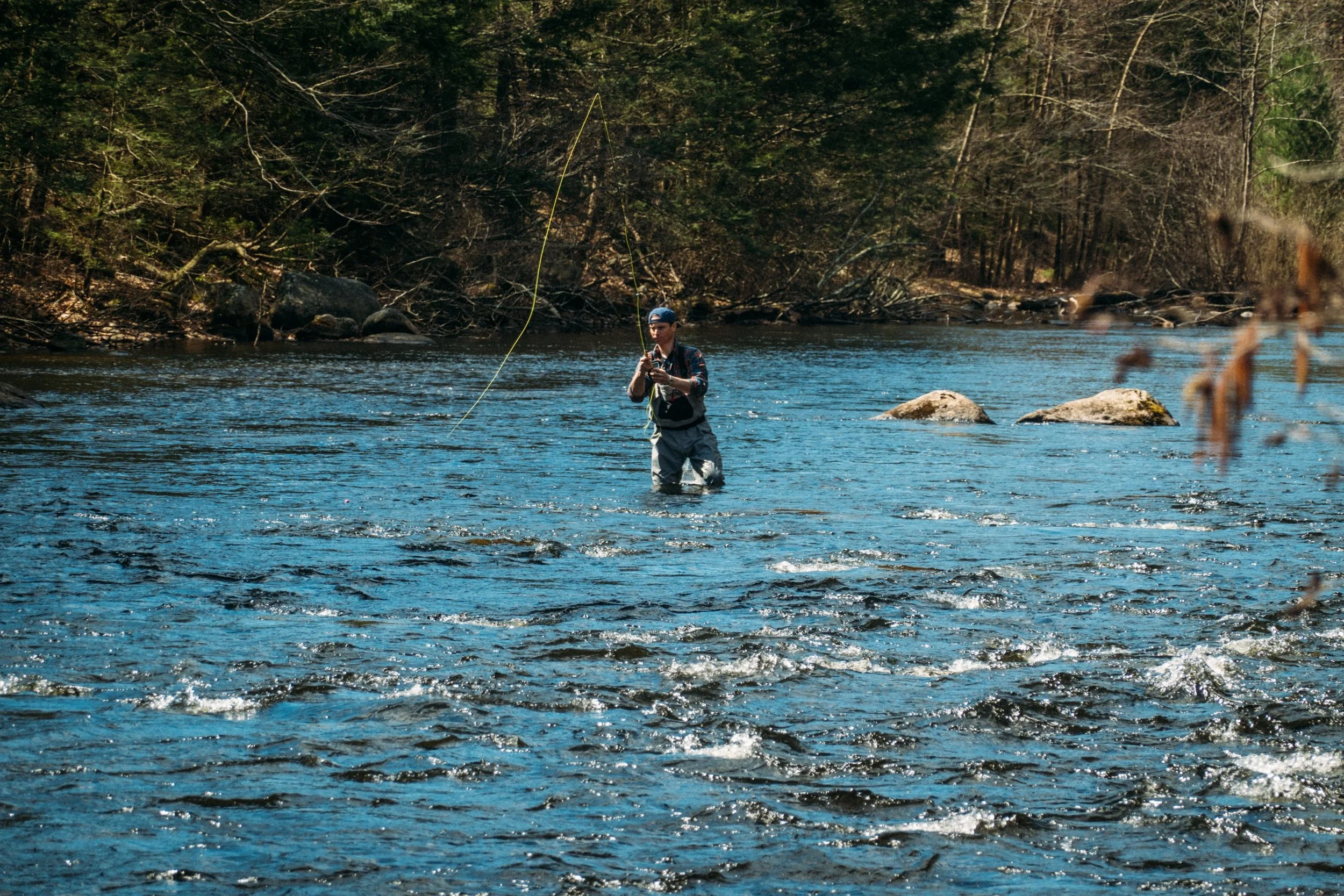
Jake in the stream
JR: One final, “last cast” question for you: Are there any projects or causes or events that you have going on that you want to spotlight?
JE: There is something that’s in the very early stages of planning that I can’t talk about yet. I’m excited about it, and it represents another slight departure in the way I alluded to about changing your life.
It's similar to things that I'm doing now, but a little bit different. Sausage, pie, and pasta. No, I'm just kidding. Stay tuned on Instagram and other channels to see what's coming.
JEJ: What about your cookbook, Jake?
JE: After about six months working on the Le Fond cookbook, I decided I was going to close the restaurant. I was hesitant to tell the publisher, but they were okay with it. We were already so far into the project that there was no stopping. We finished it six months after I closed the restaurant, and I was so thrilled with how it came out.
I would have preferred to have a cookbook for the restaurant that I was still running. But it’s a nice memento of that time. It kind of served as a way for the customers to remember it. It’s a proper cookbook. It’s shot beautifully. I felt lucky to have that opportunity, and to work with Cayla and Simone at TBSP Press. That’s how it goes with books. Without X, you wouldn’t have Y. Without Y, you don’t have Z.
One of my former regulars surprised me last night. She showed up and stayed in the hotel. The reason I was slightly late to join this call was because I was talking to her after breakfast.
JR: It’s so great you still have that community. Le Fond and everything you did there is still real for people. It sounds like you’re doing the same for your customers at North Branch Inn, too. Thank you for spending time chatting with us today, Jake.
JEJ: Yes, thank you, Jake. Appreciate it.
JE: Thank you, it’s been a great chat.
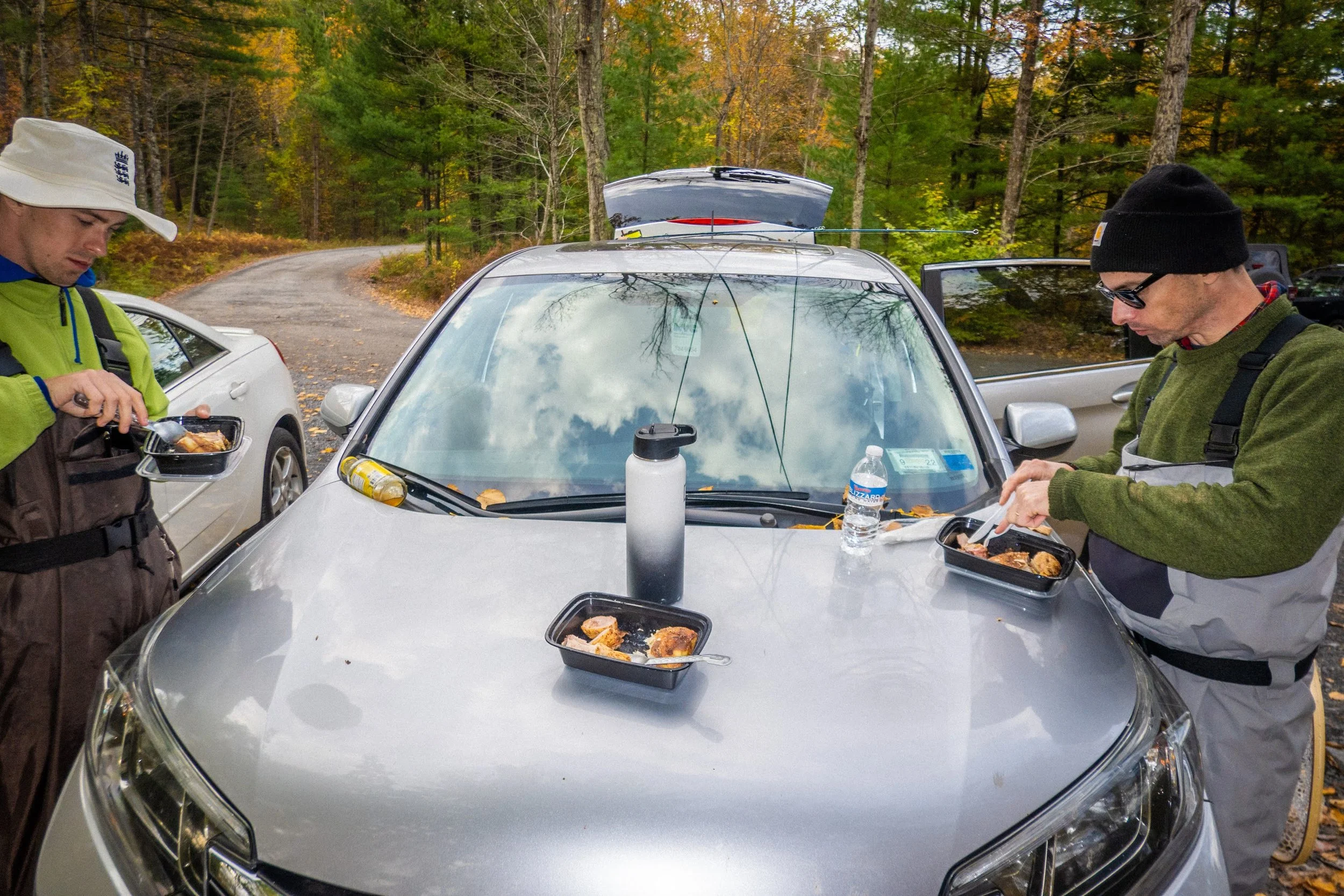
A riverside lunch
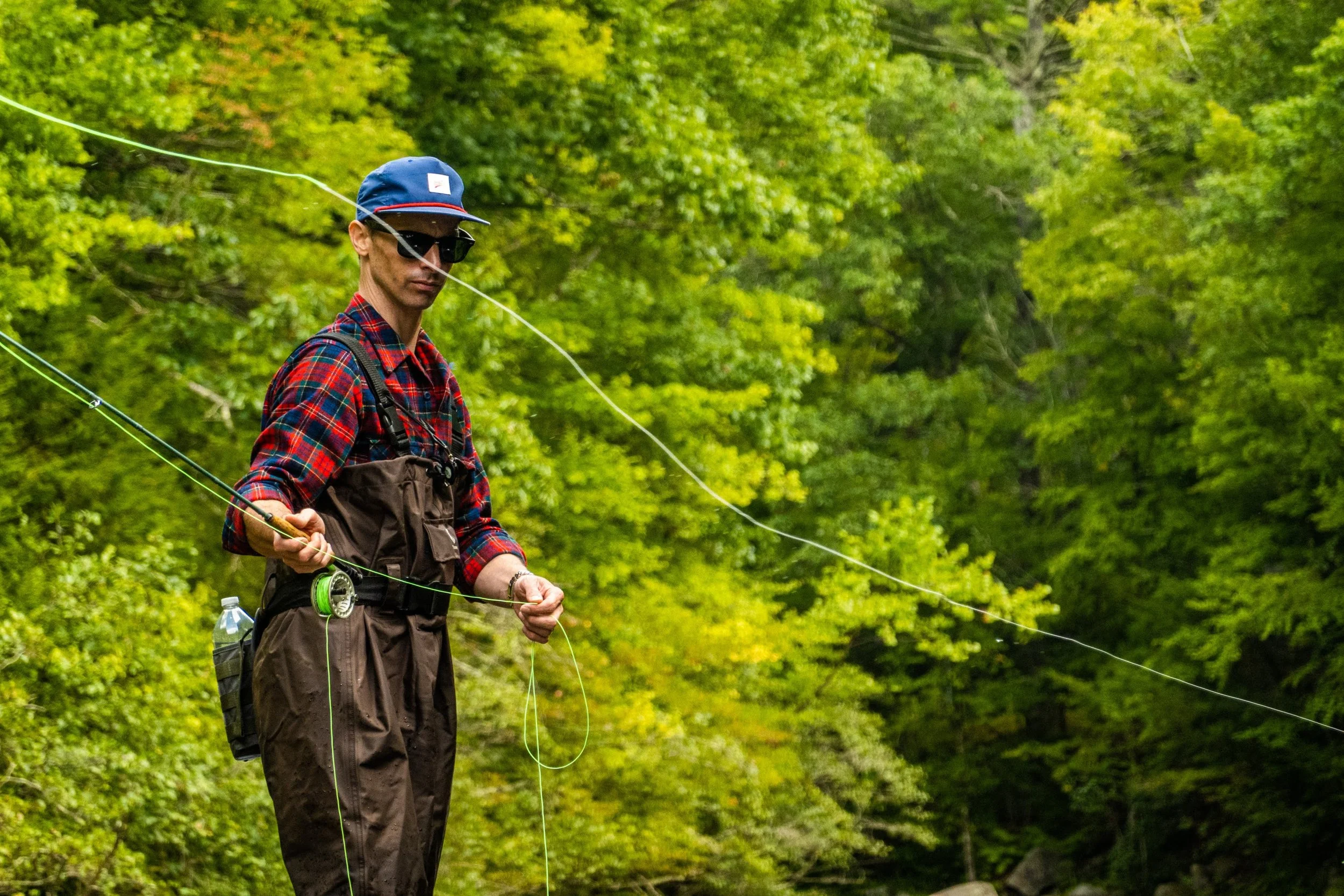
Perfecting the technique
JR: Say you were to impart advice for someone doing the same type of move, from the city to the Catskills. What advice would you give?
JE: Let me think about that one, because I do have advice. I just have to think of how to say it.
JR: We’ll come back to it later. When it comes to the North Branch Inn, what are you looking forward to most this year?
JE: One of the major differences running a restaurant up here as opposed to a bigger city, is what a seasonal economy it is. This winter I had pipes freezing, I had ice dams on my roof. It was one emergency after another and business was slow. You have all these expenses, and you don't have revenue offsetting that.
At the same time, I had time while we were slow to do things in my home and in my personal life that I put off through the summer during the busy season. I’ve come to see that ebb and flow more—as opposed to being in Brooklyn, where it's just busy all the time.
Josh recommended a Rolf Nylinder documentary called A Not Too Steady Flow of Mayflies. In the documentary, Rolf talks about how he doesn't like winter because the temperature drops, snow falls, things freeze over, and it’s pretty much constant through the season. Then, spring comes and things start changing. There’s a never-ending progression of plants blooming and coming into season. I think about that a lot, because I look forward to winter because things slow down. I look forward to spring, because it signals the start of the busy season. I look forward to the summer because it means we start having events. I like having things to look forward to and living at different paces.
JR: Very different from the constant “go, go, go” energy in New York. Part of why we’re talking today is Trout Unlimited. When you’re on a stream in the Catskills, what are you noticing? When you think about conservation, what’s top of mind for you regarding preservation of those streams?
JE: I worry about invasive species. The knotweed is just taking over, and I can see from year to year that it's getting worse. On the other hand, I heard that NY DEC decided to stop stocking the North Branch of Callicoon Creek where I spend a lot of time fishing, and that's encouraging. They've acknowledged that the system is healthy enough to not need the additional input of fish.
JR: That's great to hear. We heard a presentation at TU’s Northeast Regional Rendezvous about the Esopus Creek no longer being stocked. It’s a totally wild fishery. It's nice that it seems like things are heading more in that direction.
JE: We don't know if it's a change in the philosophy, or if it actually does indicate that the system is better, but either way, it's good.
JR: As fly anglers, what’s the most important thing we can do to protect streams and rivers for the next generation?
JE: The most important thing we can do to preserve the sport is to introduce the next generation to it, to create that interest and awareness. I don’t have children, but I have a couple of nephews who love to be outside, who love fishing. That gives me hope.
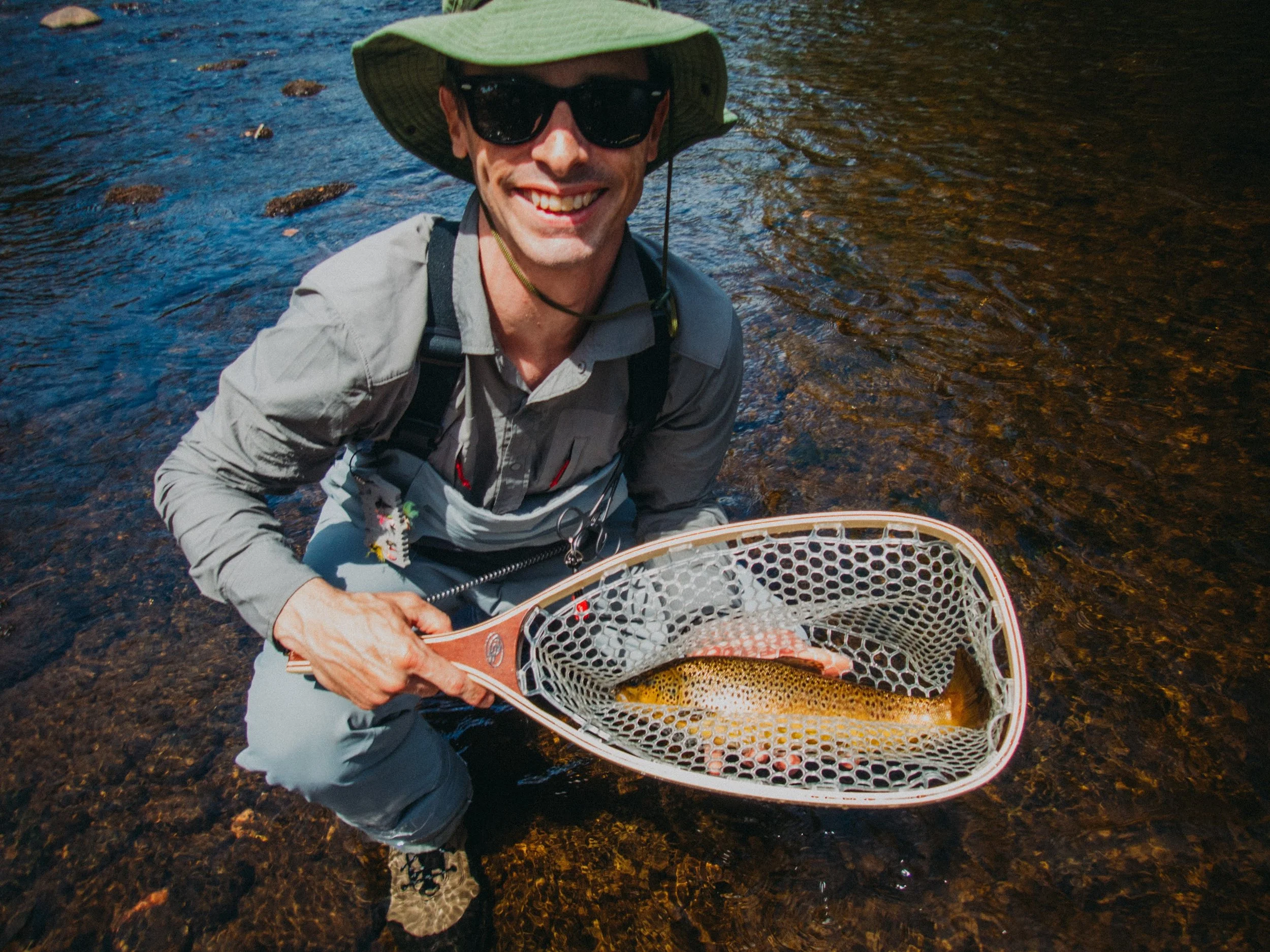
Jake with a big brown in the net