Casting in Color: In the Stream with Steven Weinberg
By Lydia Goldbeck
You would be hard pressed to find a seasoned fly angler who did not consider their time on the water an art. From the craft of tying feathers into insect facsimiles to the physical feat of throwing a nearly weightless line across a river, fly fishing offers no shortage of artistry. Everything we do is an elaborate performance for the fish we hope are lingering beneath the surface.
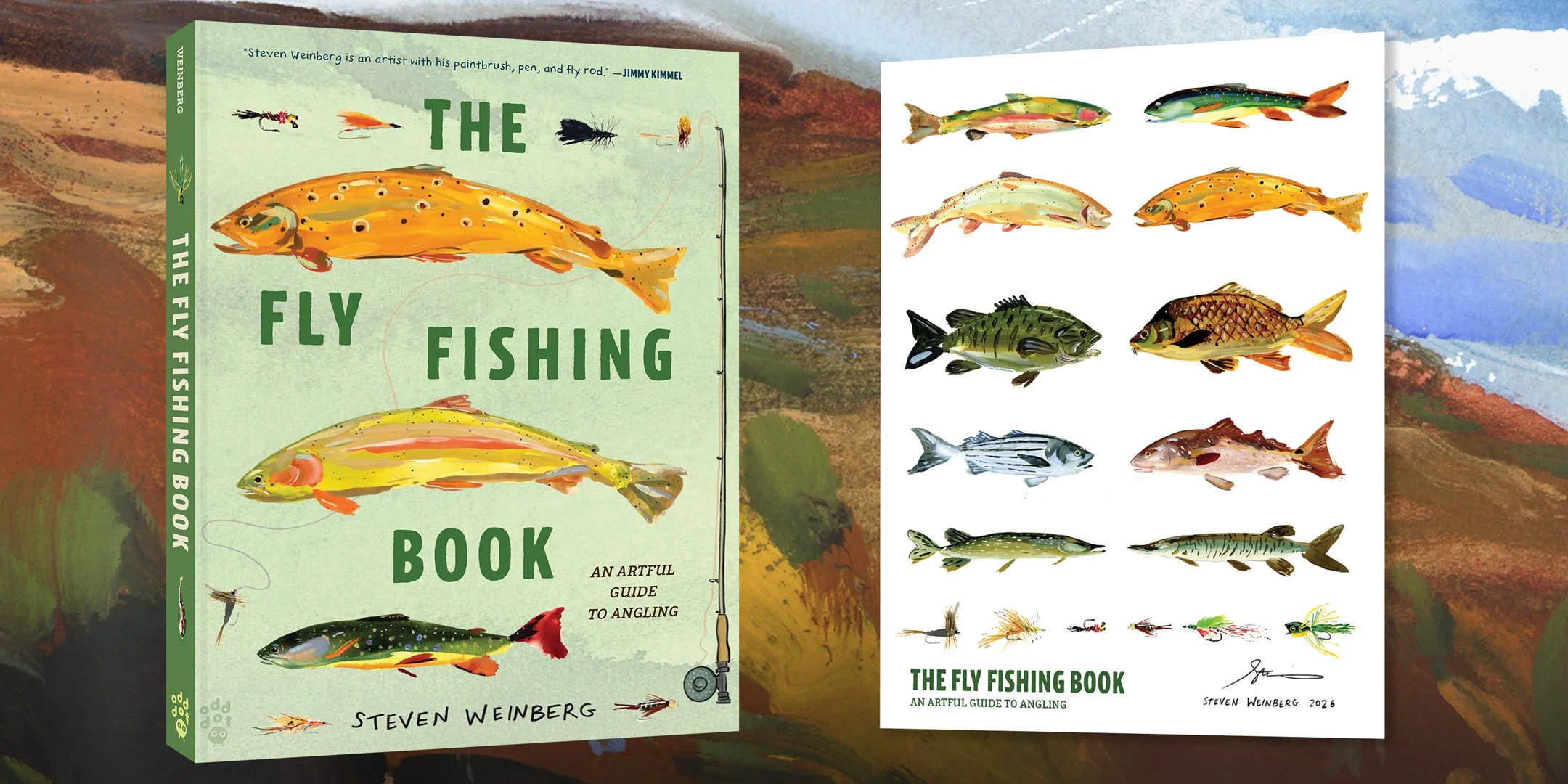
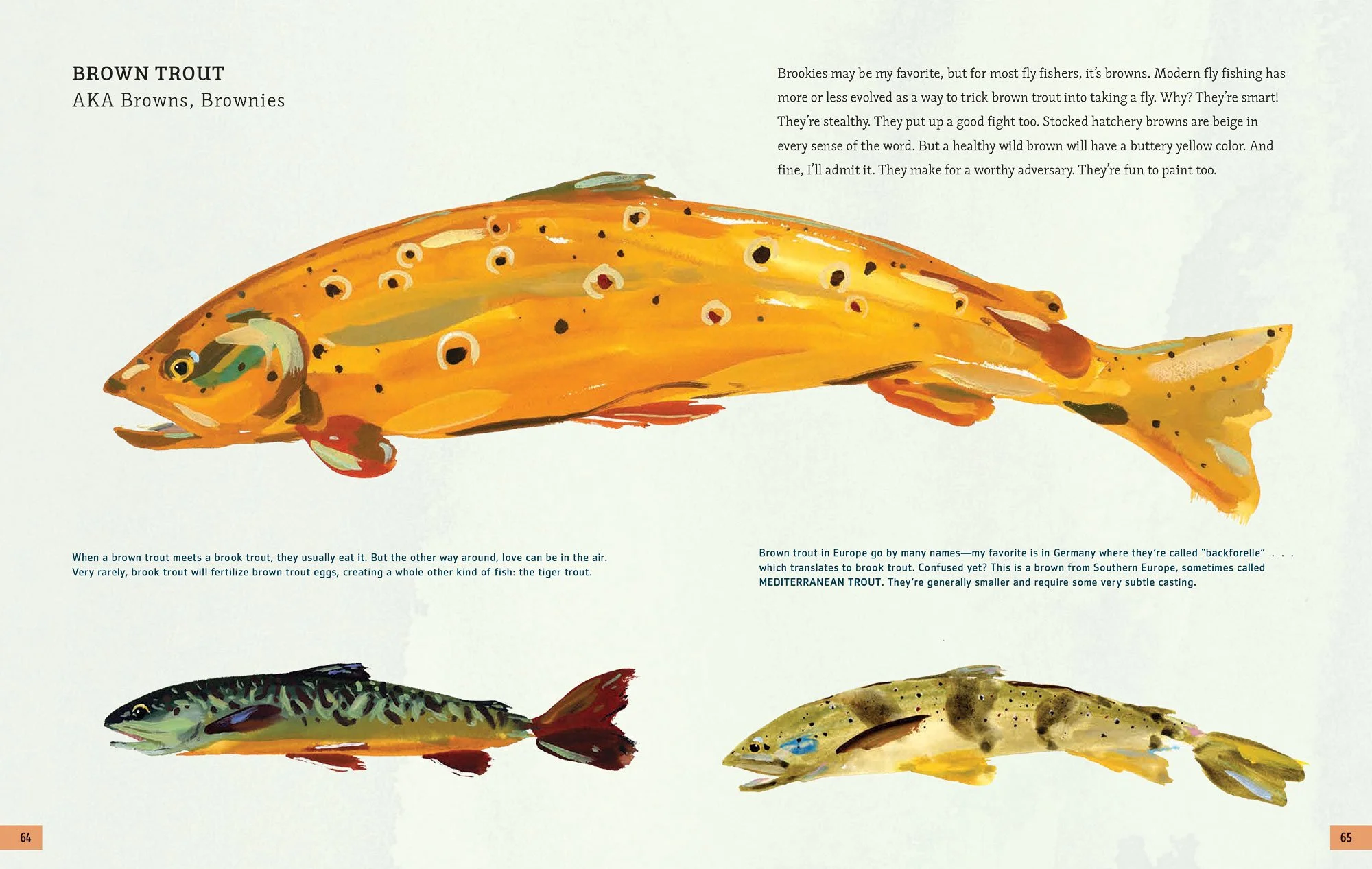
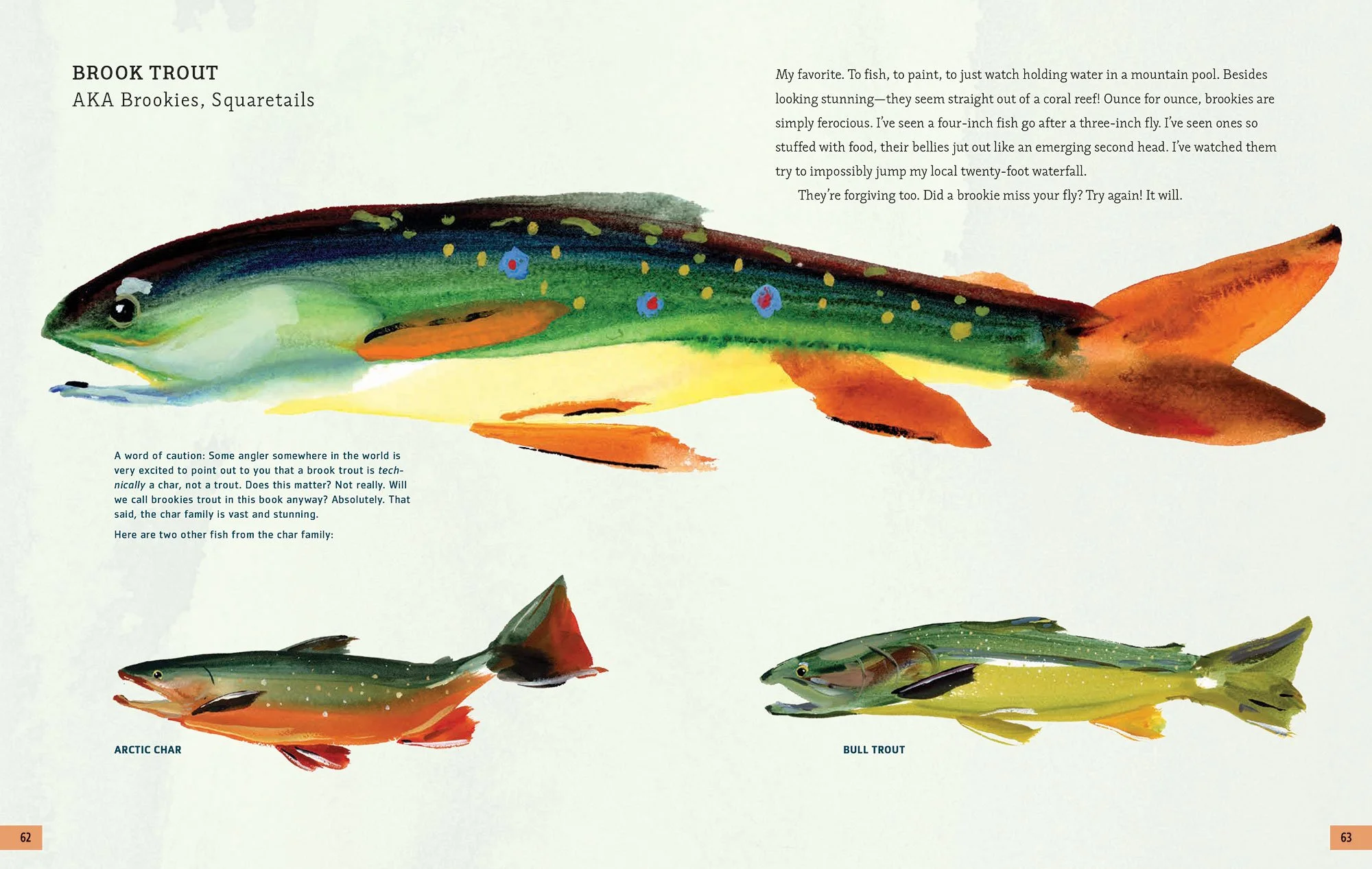
And yet it’s not so often one meets a fly fisher like Steven Weinberg, whose artistic endeavors go far beyond the river. Steven Weinberg is a writer, illustrator, and painter based in New York’s Catskill Mountains. His work has appeared everywhere from books, to beer cans, and to the Smithsonian. His latest book, The Fly Fishing Book: An Artful Guide to Angling, is out in May.
In his day-to-day, Steven can be found somewhere up in the Catskills, in the overlap between art and angling. He weaves together painting, writing, and fly fishing into a holistic artistic practice that’s centered on a reverence of landscape and wildlife. Plus, he’s one of the friendliest people I’ve had the pleasure of chatting with.
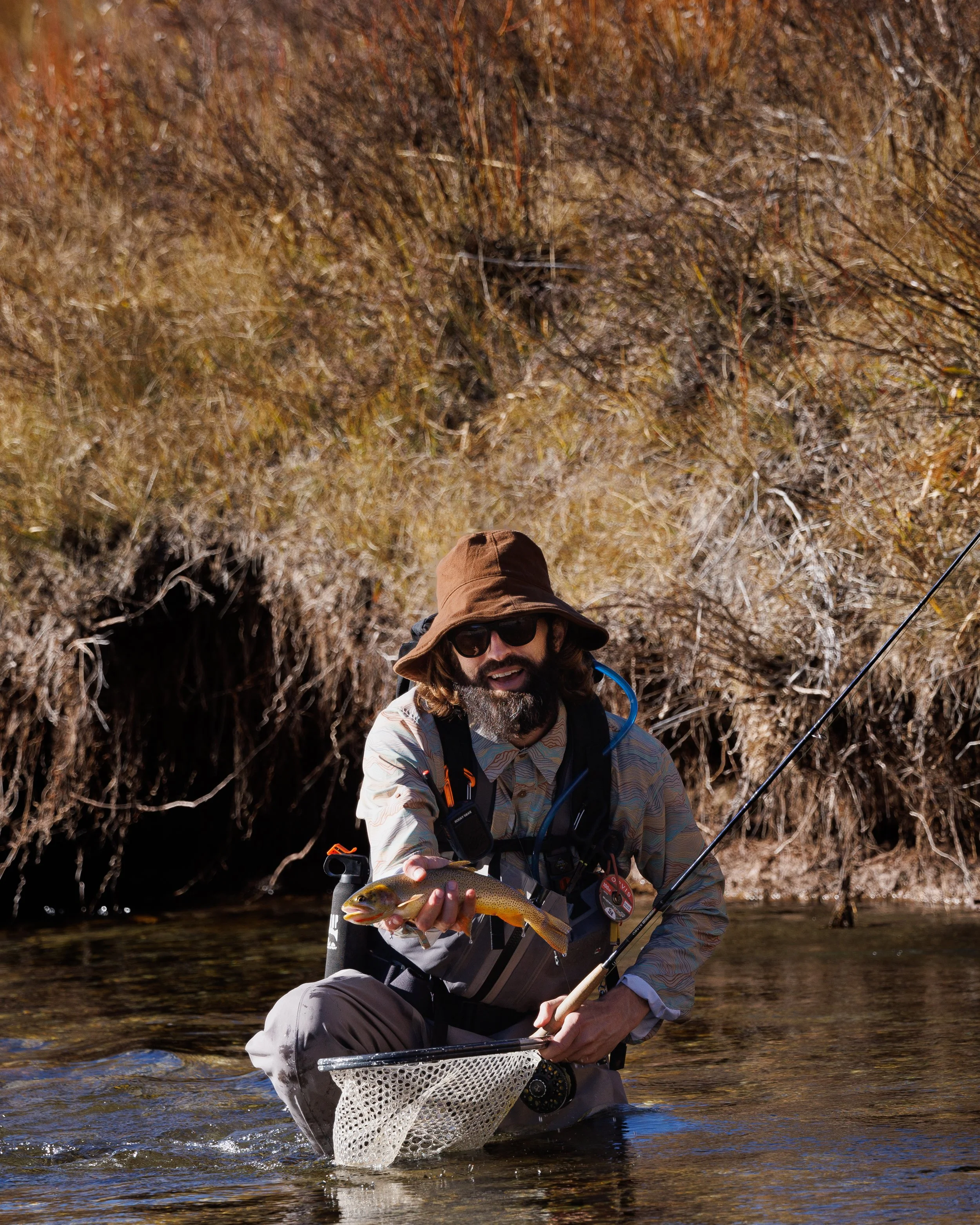
Photograph by Jamie Kennard
Lydia Goldbeck: It’s great to meet you, Steven! Thanks so much for taking time to speak with me. As an artist and fly fisher myself, I’m so excited to talk with you. For people who aren't already familiar, can you share a bit about yourself, your work, and your experience being a fly fisher?
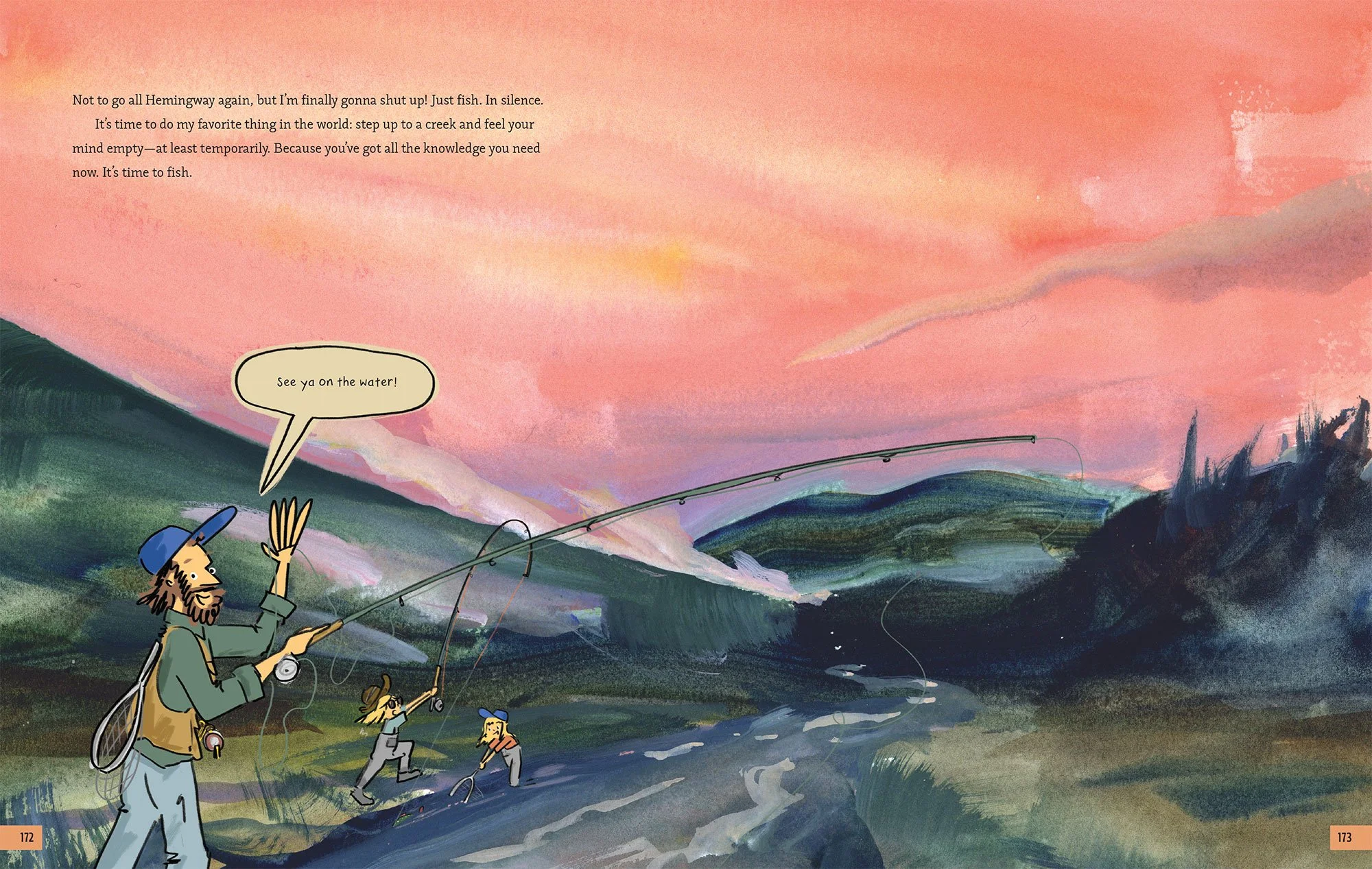
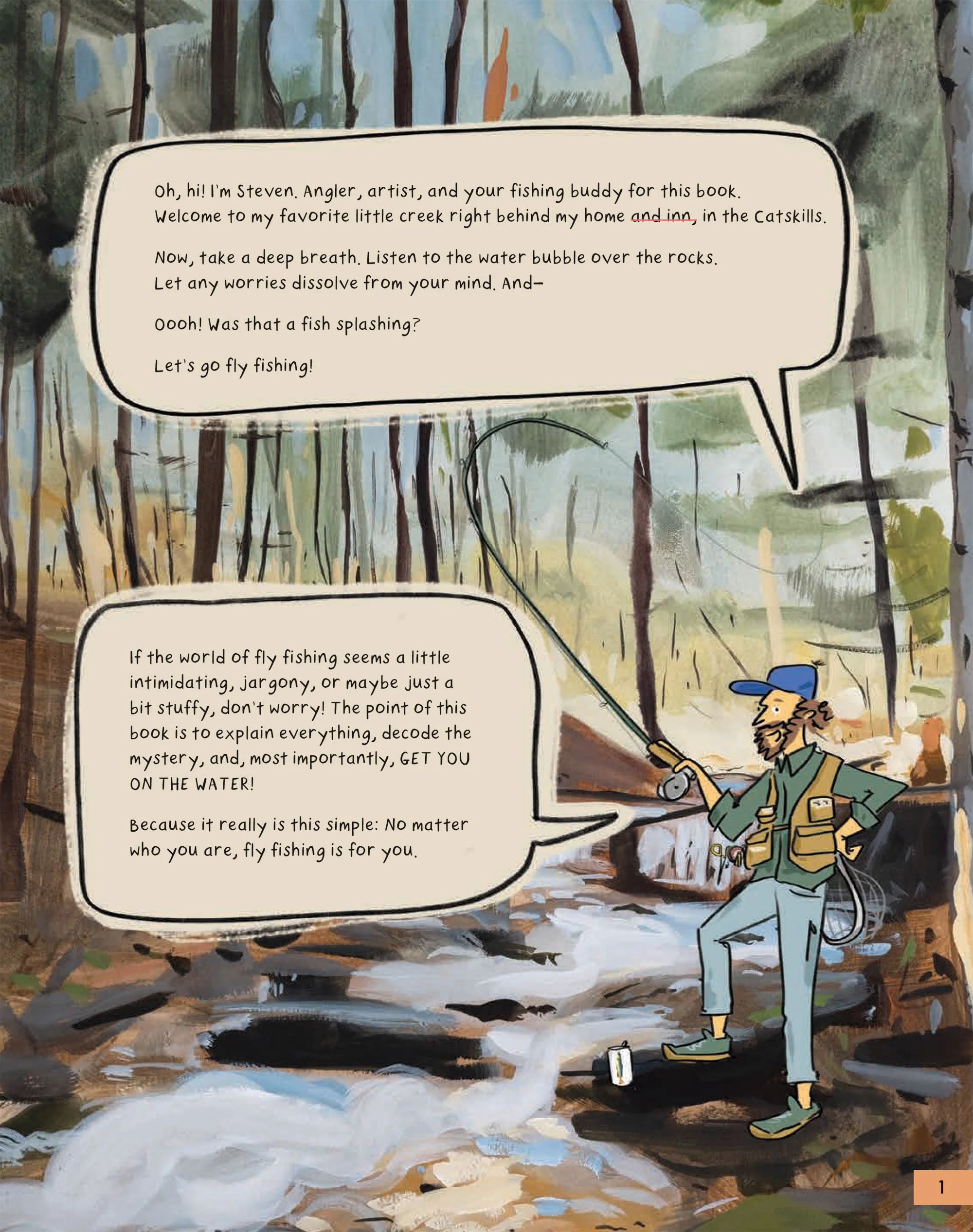
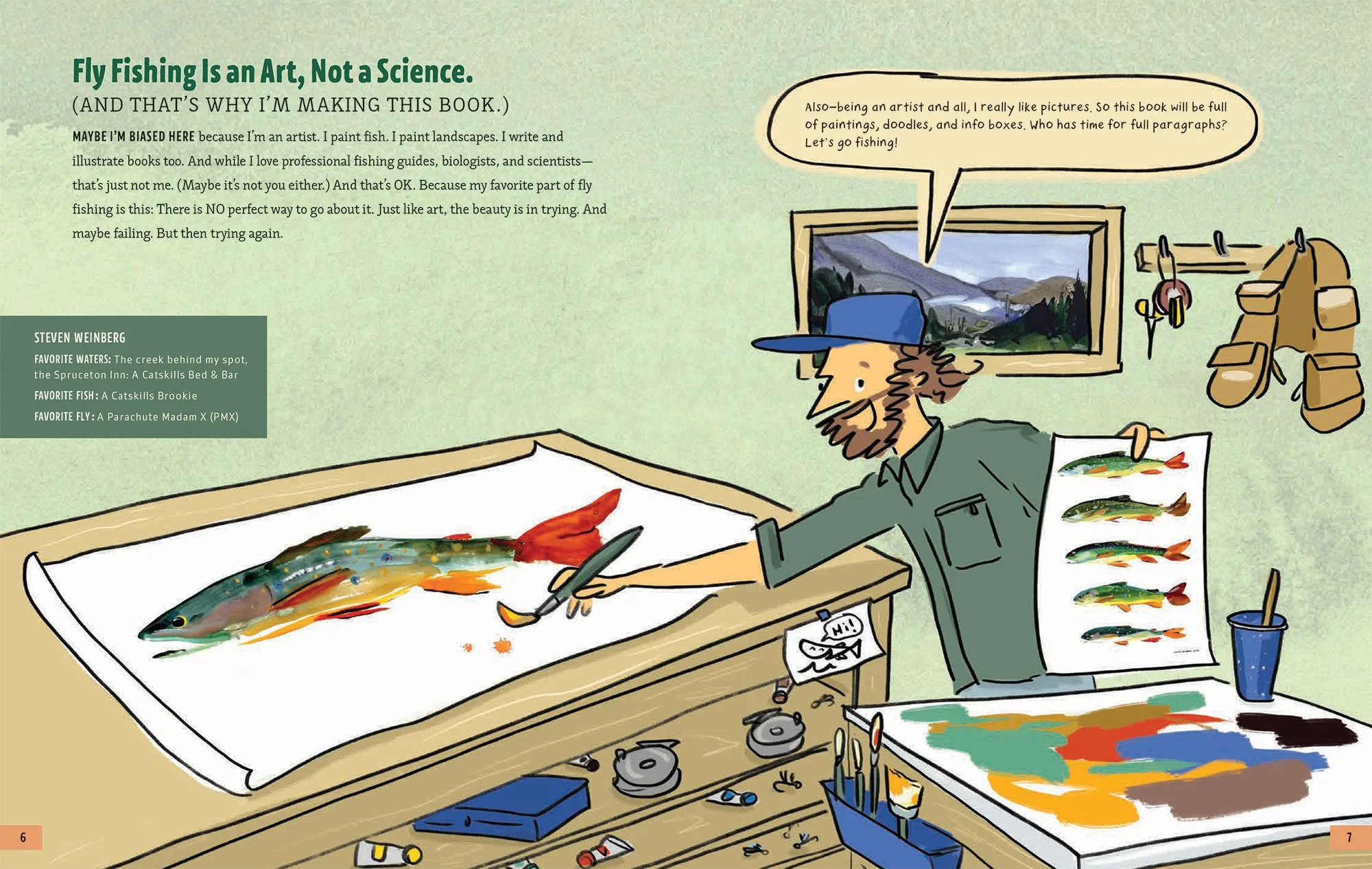
Steven Weinberg: I do many jobs. Like you, I’m an artist. I'm also an author, an illustrator, an innkeeper, and we also have an artist's residency at the Spruceton Inn. With all those jobs, but especially with the inn, I spend a lot of time showing guests the creek and showing them bits of the water and how to cast a rod. I’m not a guide, but at a certain point I wanted to put all these elements together. That’s what The Fly Fishing Book is all about. I get to write, make art, and share fly fishing with people.
On the topic of books, they’re a big part of my life. I also have a children’s book featuring my landscape paintings coming out in June called I Am The Mountain. And Casey Scieszka, my wife and co-owner of the Spruceton Inn, had her debut novel about an immortal fly fisher, The Fountain, come out last month.
When did you really get into fly fishing?
I started fishing off a dock with a classic spin rod, catching sea robins all over the east coast. When I moved to the Catskills, I started fly fishing in earnest. It’s been 14 years now living here with a stream in my backyard. Most days I’ll take a studio break and go out and see what the conditions are.
I’m also curious about when you started making artwork. What has your artistic journey been like?
I’m one of those people whose first memory is having a crayon in my mouth. As a kid I drew all the time. People would ask me if I wanted to be an artist, and I’d say, “Of course!” Why wouldn’t you want to draw all the time?
I went through the general hunk of life where people said it’s impossible to be an artist, there’s no way you can do this. But I just kept painting. I went to Colby College in Maine, and my friend and I ran the newspaper. I did a cartoon for the paper. It started out as a couple inches, then turned into a full page. I loved the idea of telling stories with pictures and words, and I thought, if I can keep figuring out how to do this, I’ll be happy.
I lived in Brooklyn for a while, where I was one of many artists, and I wasn't terribly inspired. For so much of my life I’d thought that I wanted to be an artist in New York. When I finally got there, I wasn’t quite sure what to work on. Then my wife and I moved out of Park Slope and opened a hotel in the Catskills, five miles down a seven-mile dead-end road.
Suddenly it clicked: I wanted to paint landscapes. I started fishing a whole lot more, and I wanted to paint fish, too. It was very location-based. It’s one of those things I look back on and think, I'm really happy I made that choice to move upstate.
It sounds like your art has always focused on natural subject matter. Or was that a shift that happened after you moved to the Catskills?
I’ve always been trying to document what's around me. A lot of it early on was portraiture and I did a bunch of landscape painting in college. At Colby I did an independent study where I hiked around Mountain Desert Island in the winter and painted landscapes and watercolors. The professor thought I’d lost my mind. They were like, “That's not going to work. The paint is going to freeze, and you'll freeze.” But the locale looked so gorgeous in the winter. What I learned was, you can mix vodka with the water for your watercolors and it won't freeze.
Smart! When did you decide to make art your livelihood?
Right out of college I knew I wanted to do it, I just didn’t know how. I met my wife in college while we were studying Arabic in Morocco. After graduation, we moved to Beijing and lived together. We both taught English there. I started painting a lot of ink paintings in China because, like I said, I’m a sponge. I love Chinese art.
By the time we wrapped up a year and a half of living around the world, we wrote a graphic novel about our experience. That was the first book I ever did, and it’s called To Timbuktu: Nine Countries, Two People, One True Story. From that point on, I was like, I can keep on trying to find interesting things to do and looking around the world, and maybe people will keep paying me for it. That's been my path.
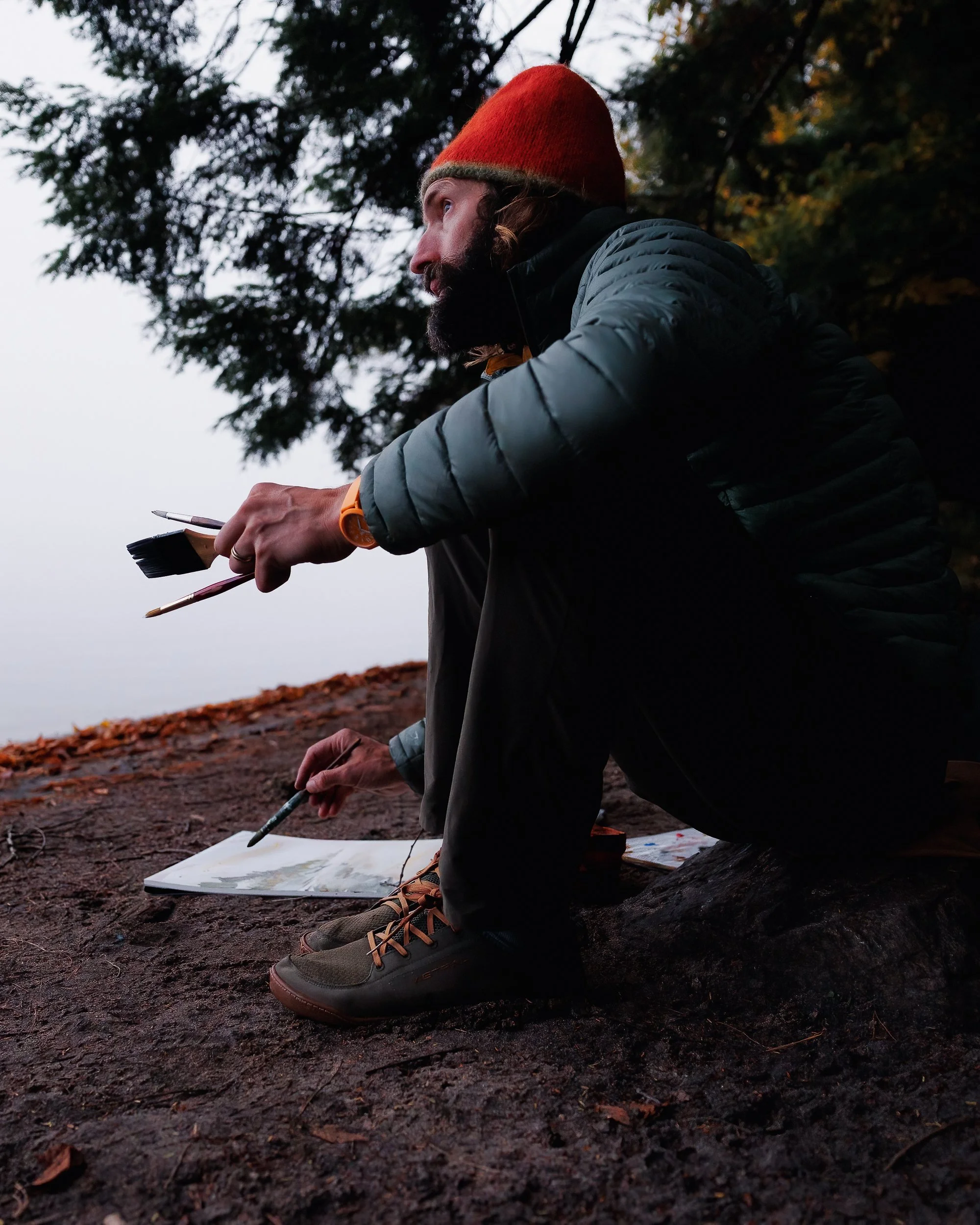
Photograph by Jamie Kennard
Do you have any favorite artists or painters? Is there anyone that’s been particularly inspiring or meaningful to you?
It's such an honor to get to paint in a world where someone like Bob White is painting his landscape scenes. In terms of how I use paint, I’m inspired by John Singer Sargent. He's so good with watercolor. You can't paint with watercolor and not think about him. Andrew Wyeth is another person, and Winslow Homer, too. These guys are so good with watercolors.
Also, Georgia O’Keeffe. She's kind of pigeon-holed, like, “Oh, she only paints flowers,” but I think about the mountains she painted. She spent most of her career in the Southwest, and would paint Cerro Pedernal—a big mountain that she could see from her two different studios—quite a bit. We live in a society that doesn’t want you to repeat what you’re doing, but so much of making art used to entail copying masterworks. I paint a lot of the same fish. I paint a lot of the same streams. It’s not boring because I’m seeing new things every time.
Painting and drawing is one of the most intimate ways of understanding something or someone. You get to know the person, the place, the animal, the object in a different way every time. In one of my drawing classes in school, we had to draw an object 100 times. It almost drove me crazy.
That might sound crazy to somebody unless they're a fly angler.
That's true. People say, "I fish the same stream every day, for a year, and it's always different.” I'm curious, how has painting informed your angling?
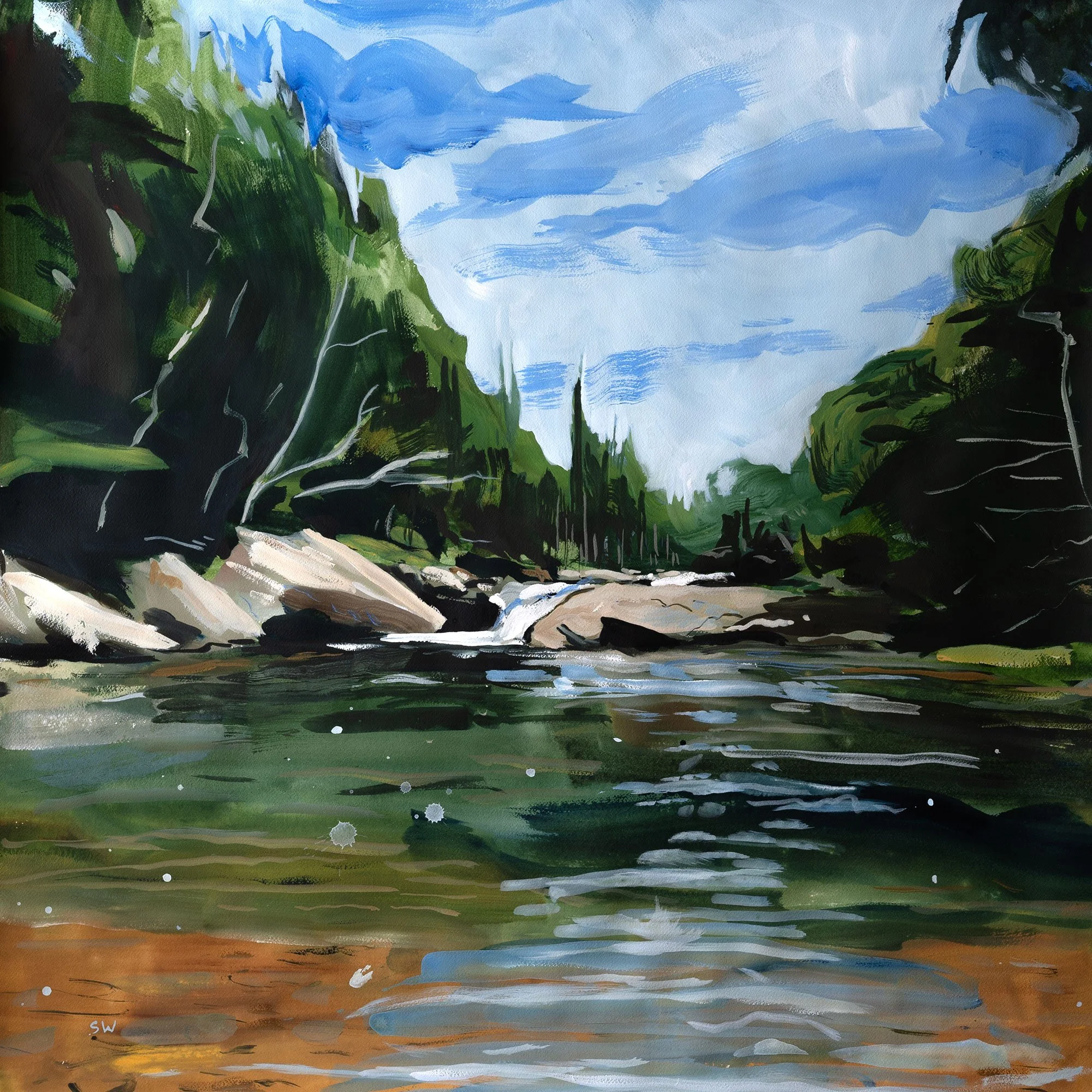
I think about painting when I'm fishing, and I think about fishing when I'm painting. There's something with watercolor that’s similar to fly fishing. With watercolor, what you’ve got is what you’ve got. It’s like a cast. You mend it a little here and there, and overworking is not good. Same as overworking is not good when you’re fishing.
It’s similar too down to the water dynamics. Watching water flow through paper is similar to how water moves on the surface of a stream. I read a theory once that beavers do what they do because the sound of water is addictive for them. On some level, I think everybody who goes fly fishing is addicted to looking at water moving. Because otherwise, why are you doing this?
I’ve heard similar things. I heard once that humans like shiny things because it’s similar to the reflective quality of water.
I mean, looking at water has got me through some days when I’m like, where are the fish?
Do you have a process for figuring out what painting or project you're going to do next?
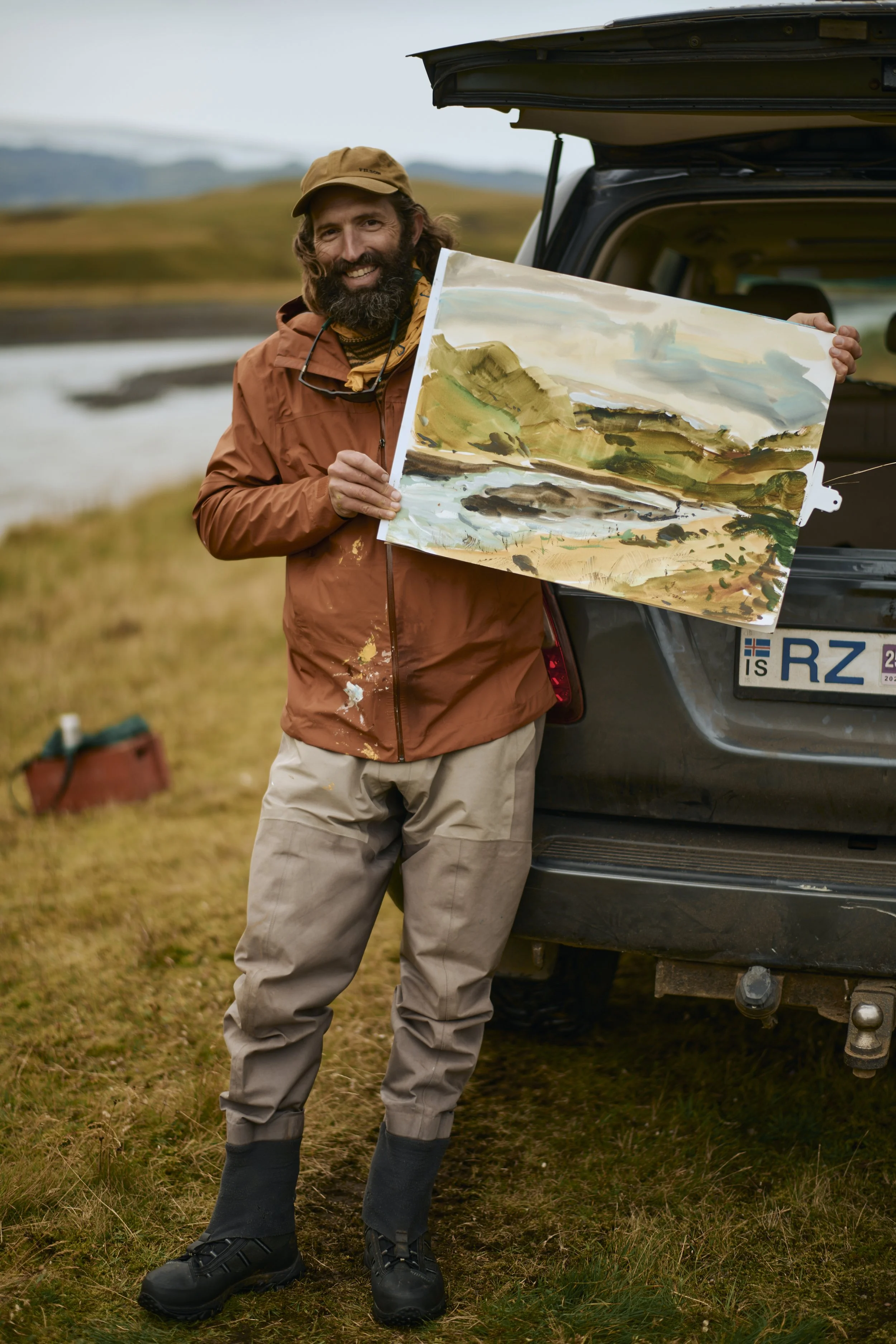
I love going on trips. I was just in Iceland for the first time at this amazing lodge, this place called Heidarvatn. They're just opening up the public and they wanted to have an artist there to paint their fish and do a map for them. I had never fished anywhere like that. These are massive sea-run trout. There are no trees. The water is about as far across as a city street, but the depth is crazy.
I'm always trying to figure out where else I can go and just get wowed. I’ve realized that a mountain can be shaped in a totally different way. It can be a totally different color. And the fish I see when traveling keep looking different. I saw an actual Arctic char and thought, “Oh wow, that’s so red. I don’t know if my paint can get that red.”
I’m curious about your artist residency at the Spruceton Inn. Have you been able to connect with other anglers who are also artists?
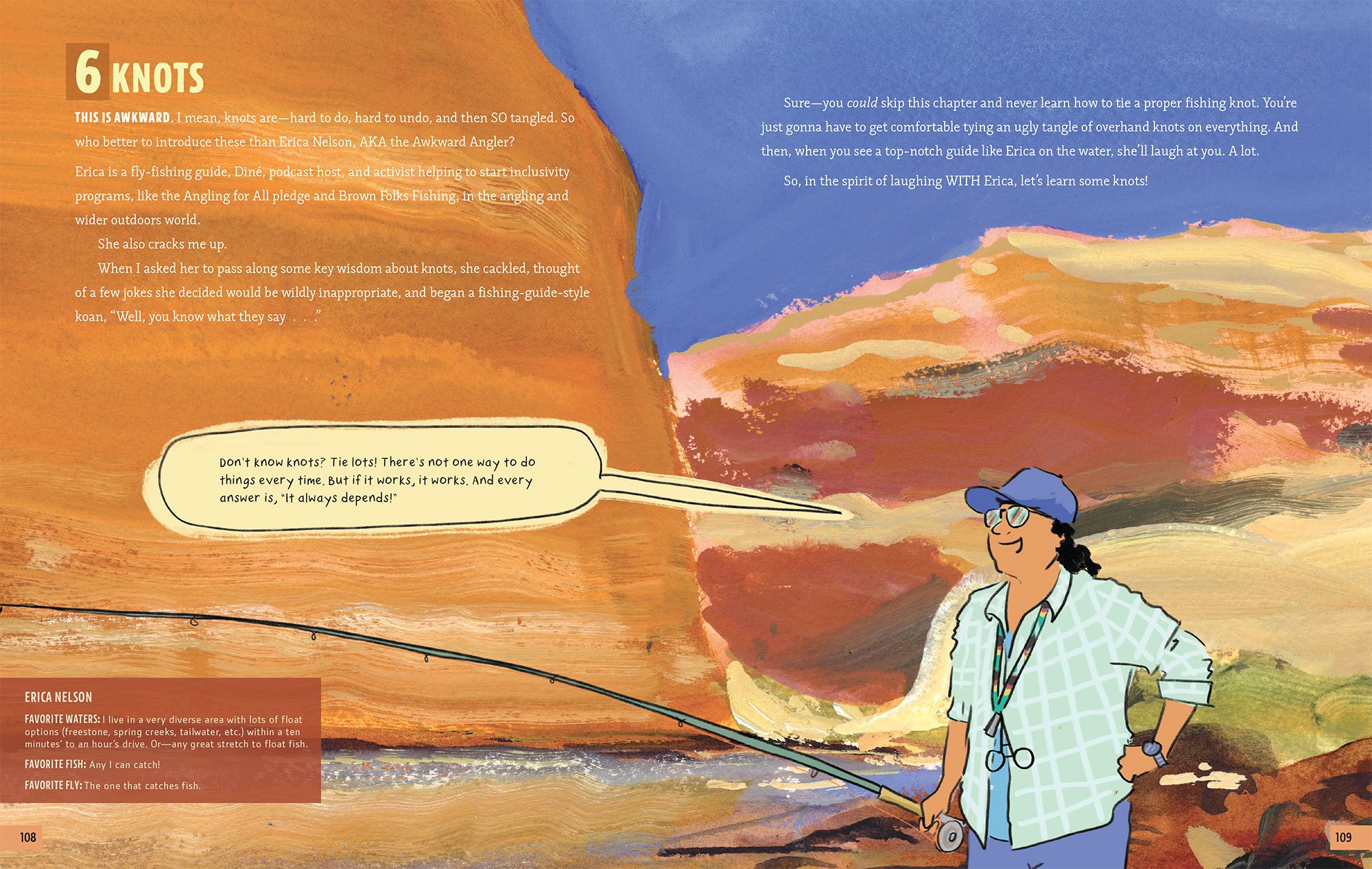
We’ve had 120 people come over the last 13 years. We do get some anglers and I'm always glad to lend a rod to somebody. Some, like writer and fishing guide Erica Nelson, are even in the book! I loved getting some time with her on the Esopus Creek when she was up for her residency.
Now that I know this residency exists, I'm definitely going to apply. Sounds like a really great opportunity.
You should! People come from different disciplines and do their work. They hang out, have some drinks, and hang out by the fire. We're on some of the text chains that are still going on, years later. It warms my heart.
It’s wonderful that you can bring people together over art and nature. You mentioned your new book, The Fly Fishing Book. What was the original inspiration for it?
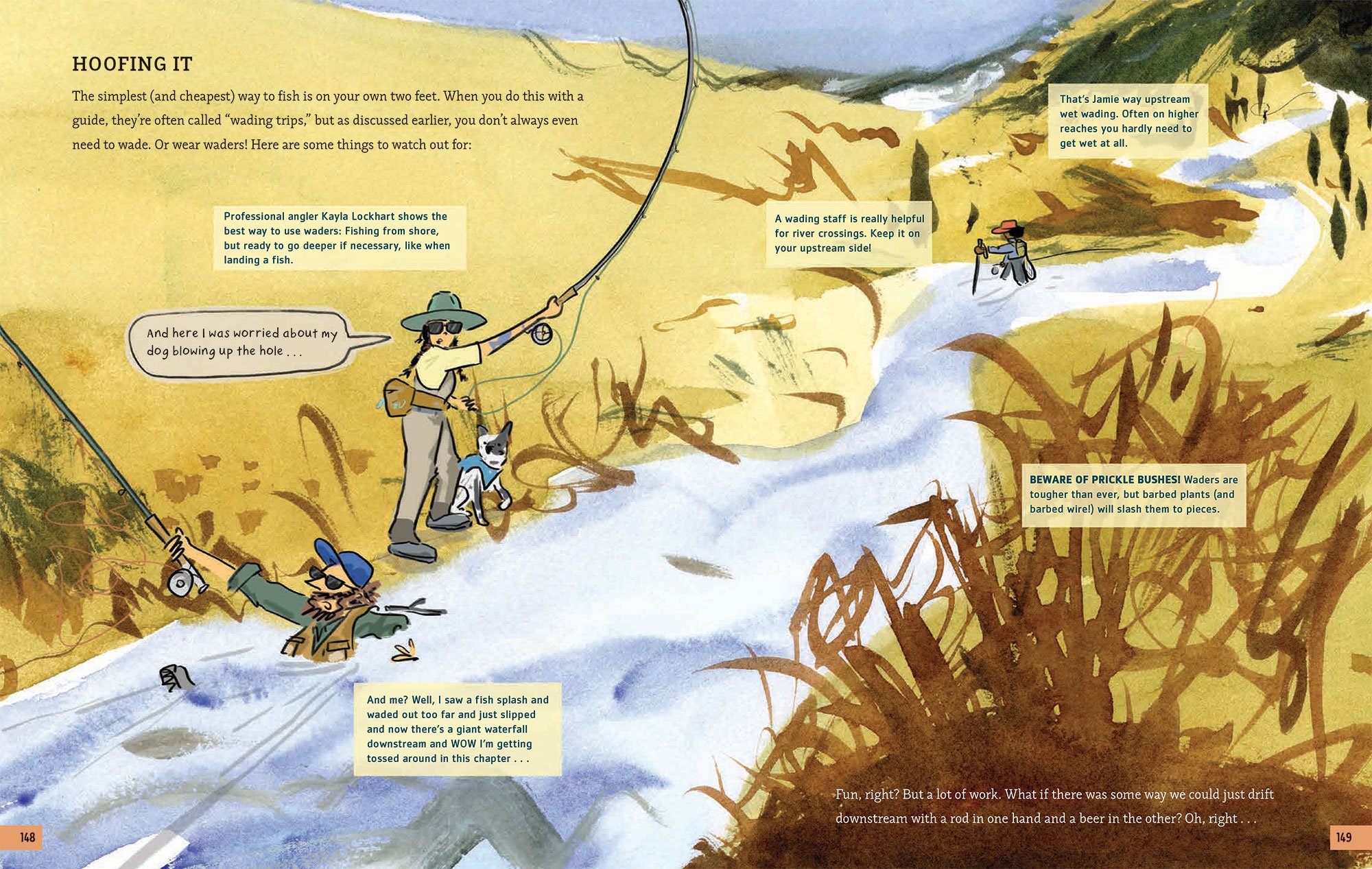
Living in the Catskills, I've gotten to take so many friends out fishing. My friends come from New York and they are fly-fishing curious. I had my spiel about the basic setup: “This is the rod, this is the tippet.” Meanwhile, over the last 15 years I started painting fish. I wanted to make a book where I can get people into the sport through painting all these things I love. I wanted to make an accessible book that anybody could pick up, whether they love fishing and they want to revisit spots, or they're curious and they’re wondering, “What do these terms mean? What do the fish look like?”
That could be helpful for me. Even after fly fishing for a while, sometimes I'm still like, wait, what? What is that?
Like a hook chart.
Yeah, exactly. I have no idea about hook sizes.
The numbers go the wrong way.
How did you go about putting the book together?
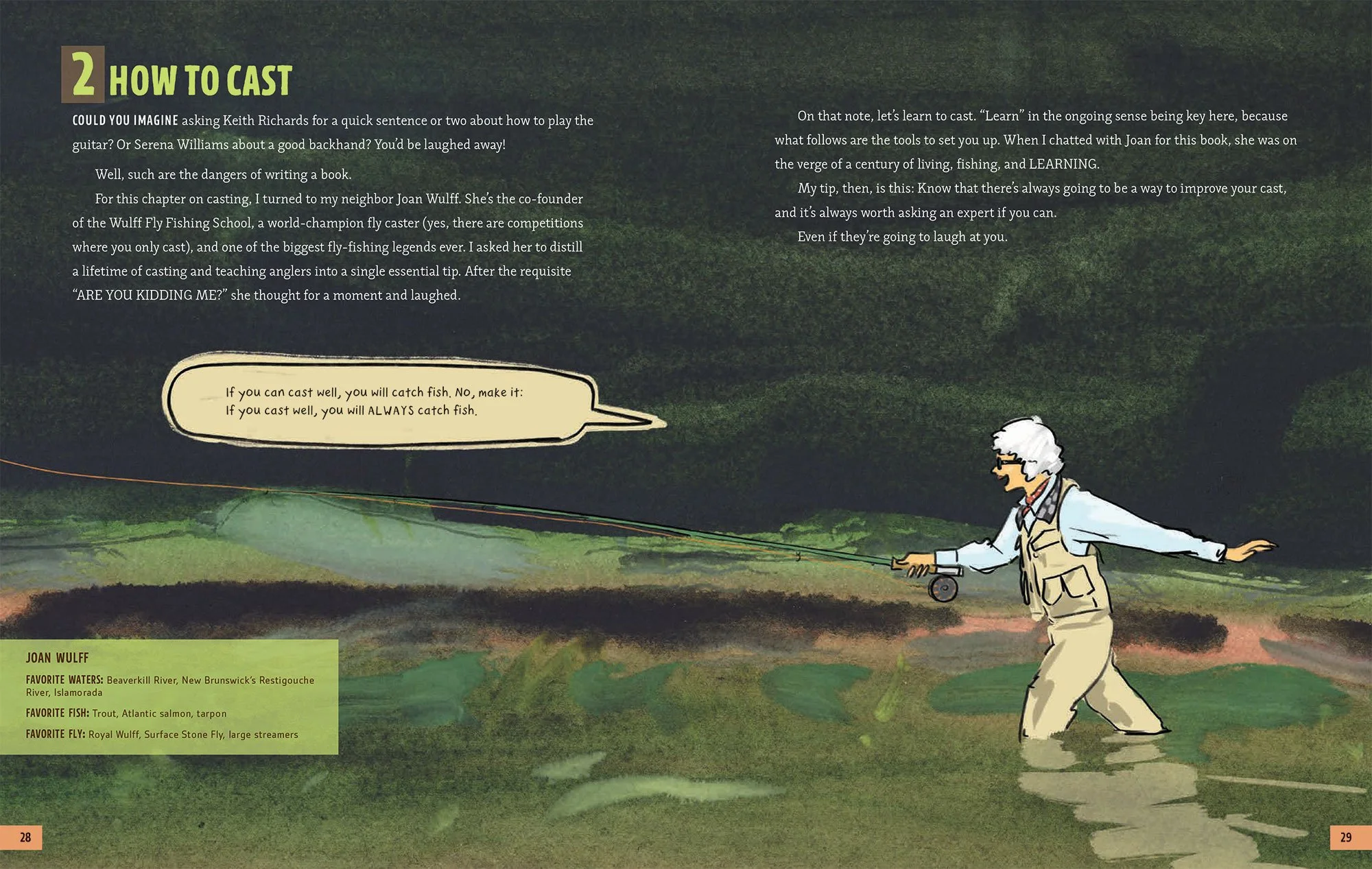
I only know so much about fly fishing, so I reached out to everyone I knew and everyone I wanted to know. The book includes everyone from Joan Wulff—I’ve gotten to meet her many times while living upstate—to folks like Tom Rosenbauer, who was just so friendly. Plus, David Coggins, Monte Burke, and Brandon Dale. As much as I'm the one yapping away, I tried to get as many voices in the book as possible. It’s like a good day of fishing: You get a lot of tips; it’s a collaborative effort.
Sounds like a really wonderful way to create something. What are you most proud of with the new book?
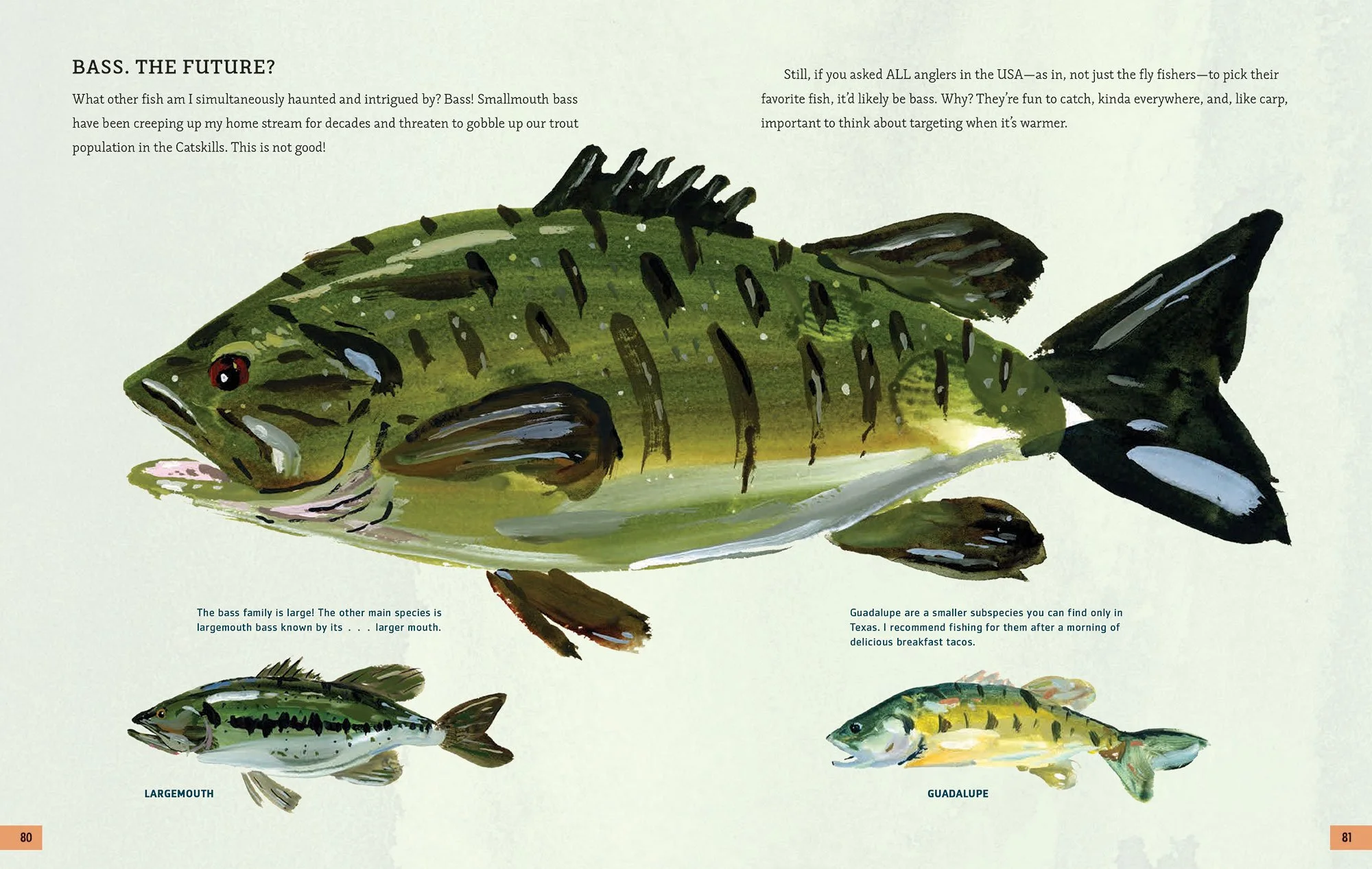
Oh, big question! I painted a lot of fish that I'd never painted before. I paint a lot of trout, but I really wanted to go deeper into the other fish you can catch with a fly rod. That was actually one of the big topics that Tom Rosenbauer talked about when I interviewed him for the book, especially in terms of fishing when it's warmer and you want to target other species. You really want people to think, what is the appropriate fish to target at this time of year?
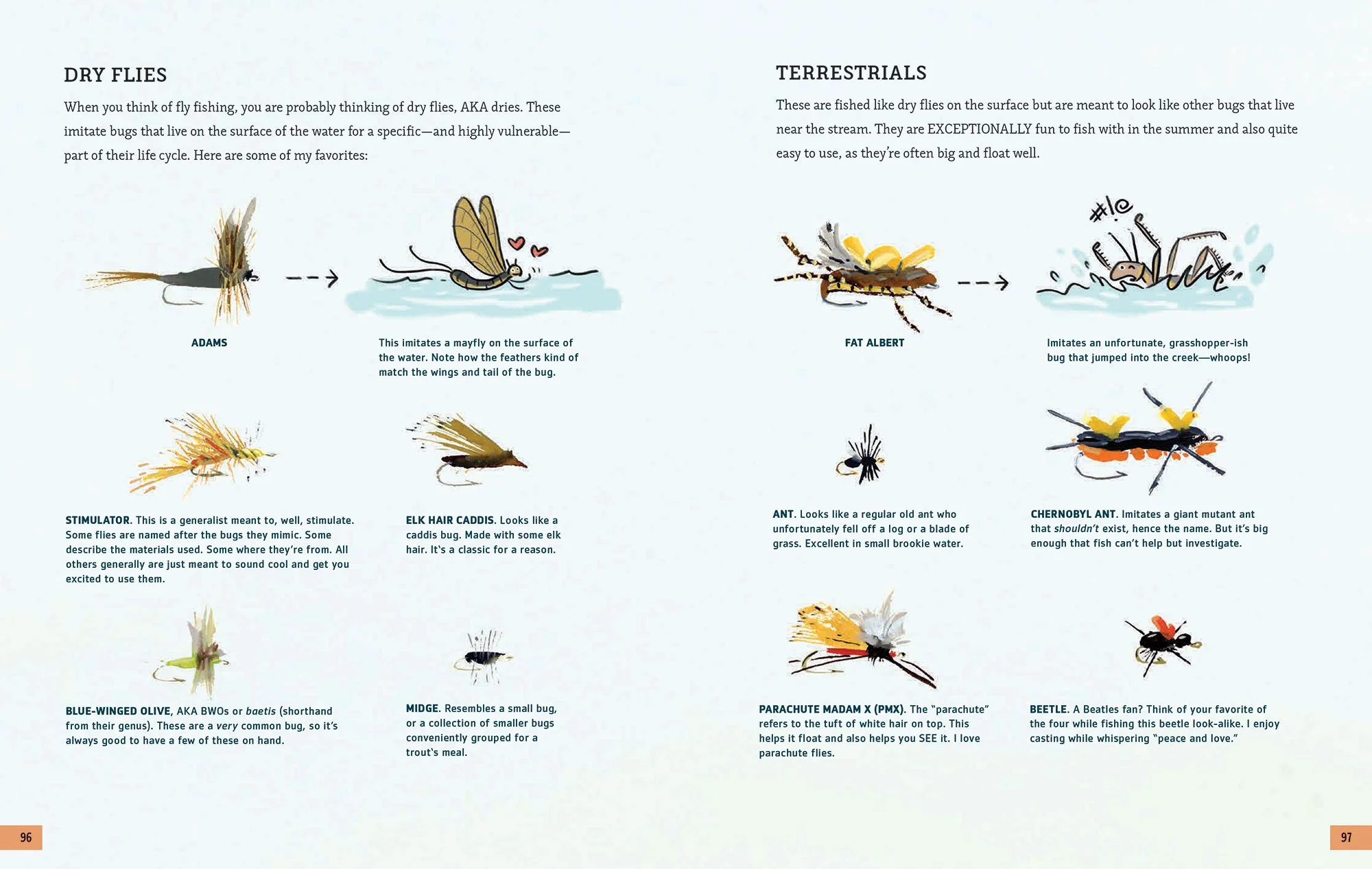
And I loved painting all the different flies, because I have the worst time remembering the names of flies. The best way to remember is to draw a picture or paint a picture of it. It was a service to myself.
I’ll have to try that. Where and when can people find your book?
The book is out May 5, and it’s available everywhere books are sold. We’re doing an event at Filson with NYC TU on May 14. People can buy the books there. The Thursday before that, on May 7, we’re doing an event at Quaker Marine in Greenpoint, Brooklyn. They’re doing a whole line of clothing with my trout on it.
It’ll also be available anywhere books are sold, from Urban Angler, Books Are Magic, and Community Bookstore in NYC, to spots like Rough Draft upstate. If you don’t see it at your favorite local indie, just ask! That’s one of the best ways to support authors.
Yes, support your local bookstore. I wanted to ask how you initially connected with NYC TU?
Jesse Vadala might have been the first person I connected with because he does so much work across the Northeast. Then Mike Barcone with West Kill Brewing because that was the beer supplier for many of the events with Filson. The Brookies for Brookies campaign that West Kill Brewing did with Trout Unlimited was a great bridge. It's been a real honor to be the guy who paints the fish on the can, and that's how a lot of folks know me.
I've seen your prints at the fundraisers and I've always been curious who you were. Now I know.
I do prints. I paint on a lot of apparel. That’s part of what we’ll do at the event at Filson. We’ll auction off a few pieces for TU. You are one of the organizations that clearly do so much good work, and I love how you unite people. This is a rough moment politically, and I appreciate how TU brings together people from all over the country who can agree that we need to have clean, cold water.
That segues perfectly into my next question. What are your top concerns about the conservation of beloved Catskill rivers?
The big concern is the climate crisis. We need to stop burning so many carbons in the atmosphere. There's no way around the other problems that are going to happen if we can't figure that out first.
More locally, there's immediate specific issues like the invasive knotweed. We have to figure out how to keep these streams cold, which is related to the global problem. TU worked with The Spruceton Inn on that, doing stream restoration with the New York State DEC. The stream on the property was getting too wide, and we created a deeper channel, keeping it cooler and fighting erosion. So, it's a mixture of global problems and small solutions.
The last thing is the brook trout. We're trying to keep the brook trout safe while brown trout are coming up our stream.
Cold water is paramount for protecting the brookies. There are a lot of individual decisions that can help with addressing the climate crisis, but it can often feel like a losing battle.
That's the best part of the stream restoration work. As an individual, the climate crisis feels intractable. It seems like there's nothing you can do to stop big corporations from doing whatever they're going to do. But you can get people who feel powerless to look at a stream and do what they did in my backyard: narrow a stream, do native plantings, understand what cold water means to native species. Then people start to think about everything else that's environmental in their life.
That's why fly fishing is so great: people who otherwise vote for all kinds of other things suddenly realize what it takes for them to have a trout on the end of their fly line. They start thinking differently about who they want to vote for.
An unexpected common ground. What is the most important thing we as fly fishers can do now to protect trout and cold water fisheries for the next generation?
Sign up to join TU!
Photograph by Christian Anwander
What's a question that you wish interviewers might have asked you before in previous interviews and normally they don't?
This is one of my first interviews about The Fly Fishing Book. The last book I did is called What Is Color? and it's kind of the other part of how I made this book. It's a nonfiction kid's book about how color is made. It was very fun for me to make, and I liked how the interviews I did for it usually ended with, “What’s your favorite color?”
Well please tell us, what is your favorite color?
It's kind of yellow-orange. Kind of like on a brook trout. That yellow.
I'm trying to think of all my oil paint colors.
To capture that color I would use Turner's yellow.
The Pantone color of the year. Let’s close with the “last cast” question: Is there a project or cause that you would like to promote?
The other book about fishing you should read this year is my wife's novel, The Fountain. It's about a 214-year old fly angler from the Catskills, who hasn’t aged since they were 20 and comes home to figure out what made them immortal. It’s in stores now.
And I have another book coming out this year called I Am the Mountain. It's my love letter to the mountains I look at from my studio all year round. It's one mountain talking to you about senses and the seasons. It’s coming out in June.
Those both sound exciting. Thank you so much for taking time to speak with me. It’s been an honor.
Thanks for letting me yap on. This has been delightful.